Guide to Lab-grown Diamonds

Guide to Lab-grown Diamonds

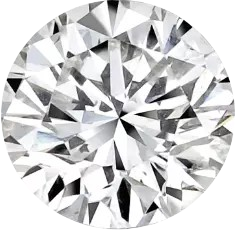
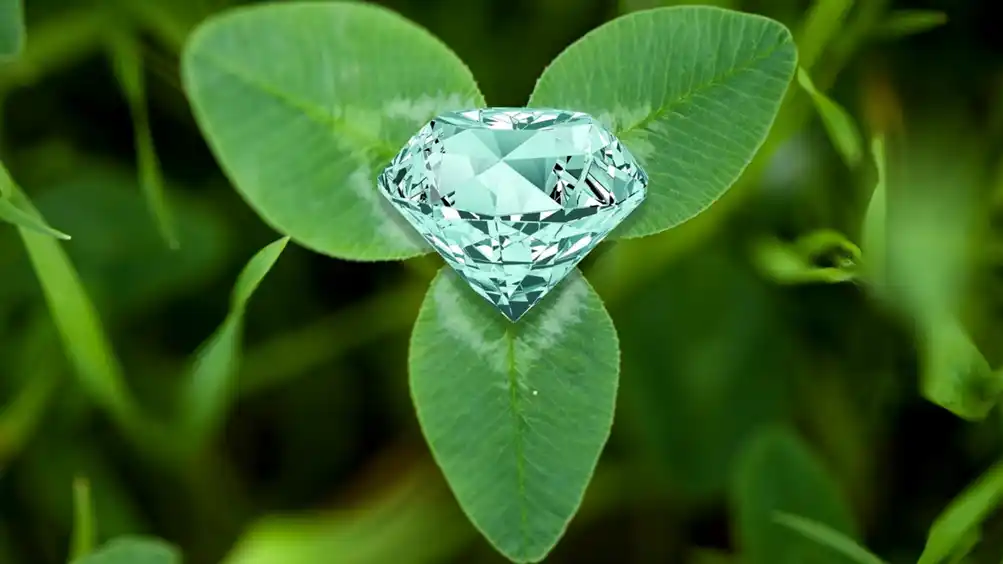
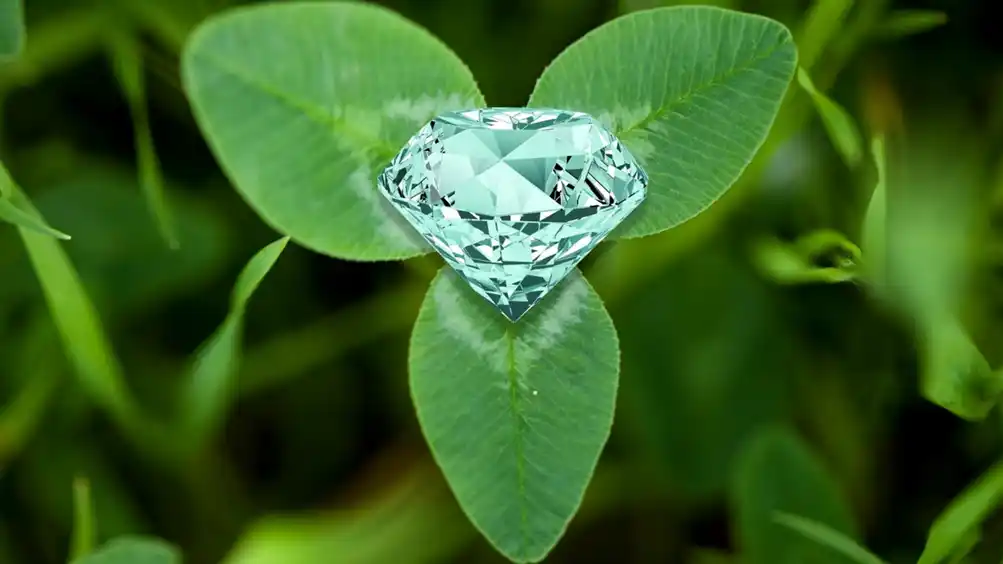
Lab-grown diamonds are diamonds produced artificially in a laboratory environment rather than mined from the earth. These diamonds offer the same characteristics as natural diamonds, but are created in a human-controlled process. This comprehensive guide will provide detailed information about lab-grown diamonds, including their characteristics, manufacturing process, advantages and disadvantages compared to natural diamonds, as well as other important information to consider.
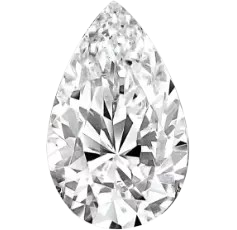
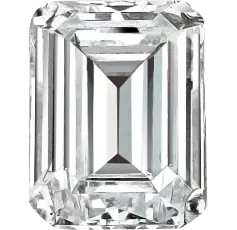
lab-grown diamonds

Lab-grown diamonds are known for the following characteristics:

  1. 1. Chemical composition: Lab-grown diamonds are composed exclusively of crystallized carbon, just like natural diamonds.

  2. 3. Crystalline structure: They have the same crystalline structure as natural diamonds, with an arrangement of carbon atoms in a cubic crystalline network.

  3. 3. Hardness: They are extremely hard and have a hardness of 10 on the Mohs scale, the highest possible. This makes them as durable as natural diamonds.

  4. 4. Color:May vary from clear to yellow, brown, blue and other colors, depending on manufacturing processes and impurities present

  5. 5. Clarity: There may be more or less inclusions exactly like natural diamonds.

  6. 6. Cutting and Polishing: They can be cut and polished as precisely as natural diamonds, creating facets that reflect light equally.

Lab-grown diamonds can be produced through two main processes: HPHT (High Pressure High Temperature) and CVD (Chemical Vapor Deposition). Both processes involve creating controlled conditions to encourage the growth of diamonds, but differ in the method used. Below is a detailed description of both processes:
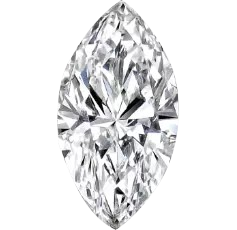
HPHT (High Pressure High Temperature)

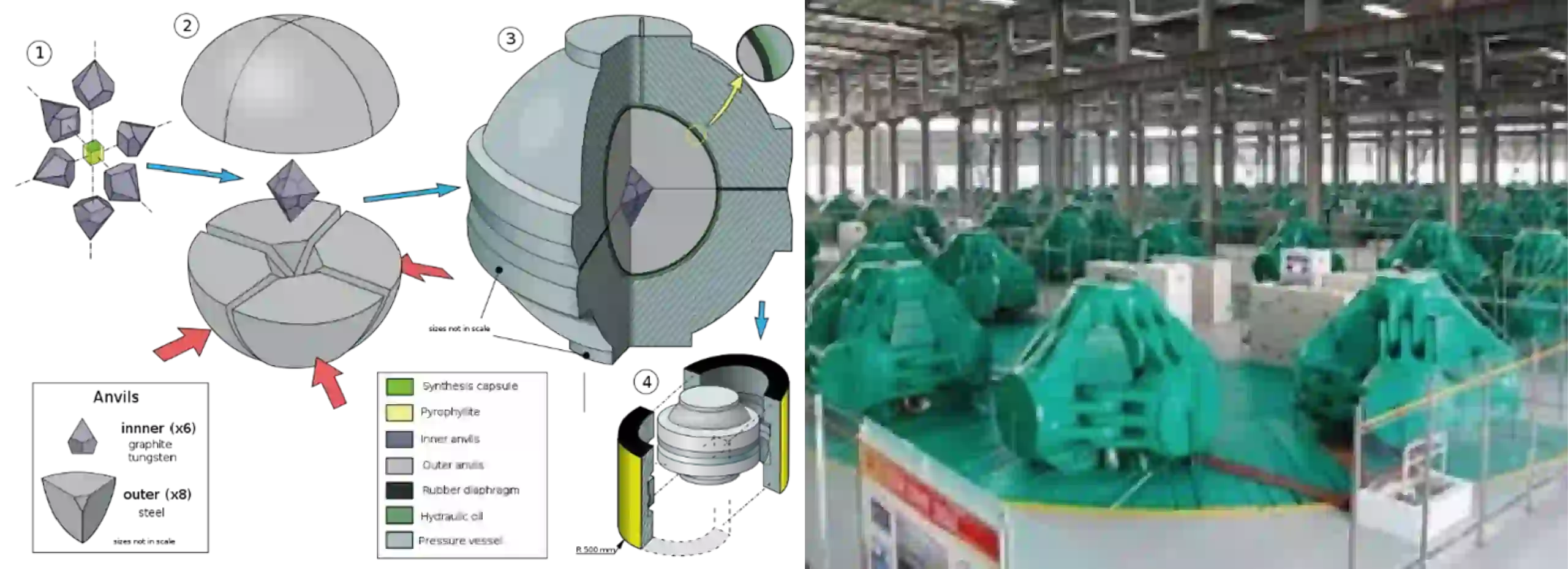
HPHT Diamonds

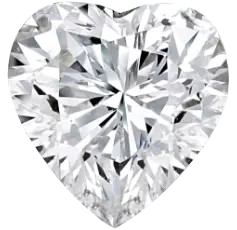
In the HPHT process, high pressures and temperatures are used to create ideal conditions for diamond growth. The carbon is placed in a pressure chamber together with a metal catalyst, such as nickel, and is then subjected to extremely high pressures, similar to those found in the Earth’s mantle. High temperatures and pressures allow carbon to crystallize, forming diamonds. Next, the rough diamond crystals are taken out of the pressure chamber and can be cut and polished to make them suitable for use in jewelry or other applications.
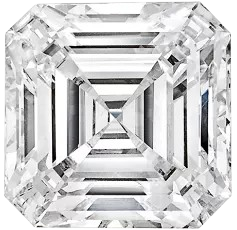
CVD (Chemical Vapor Deposition)
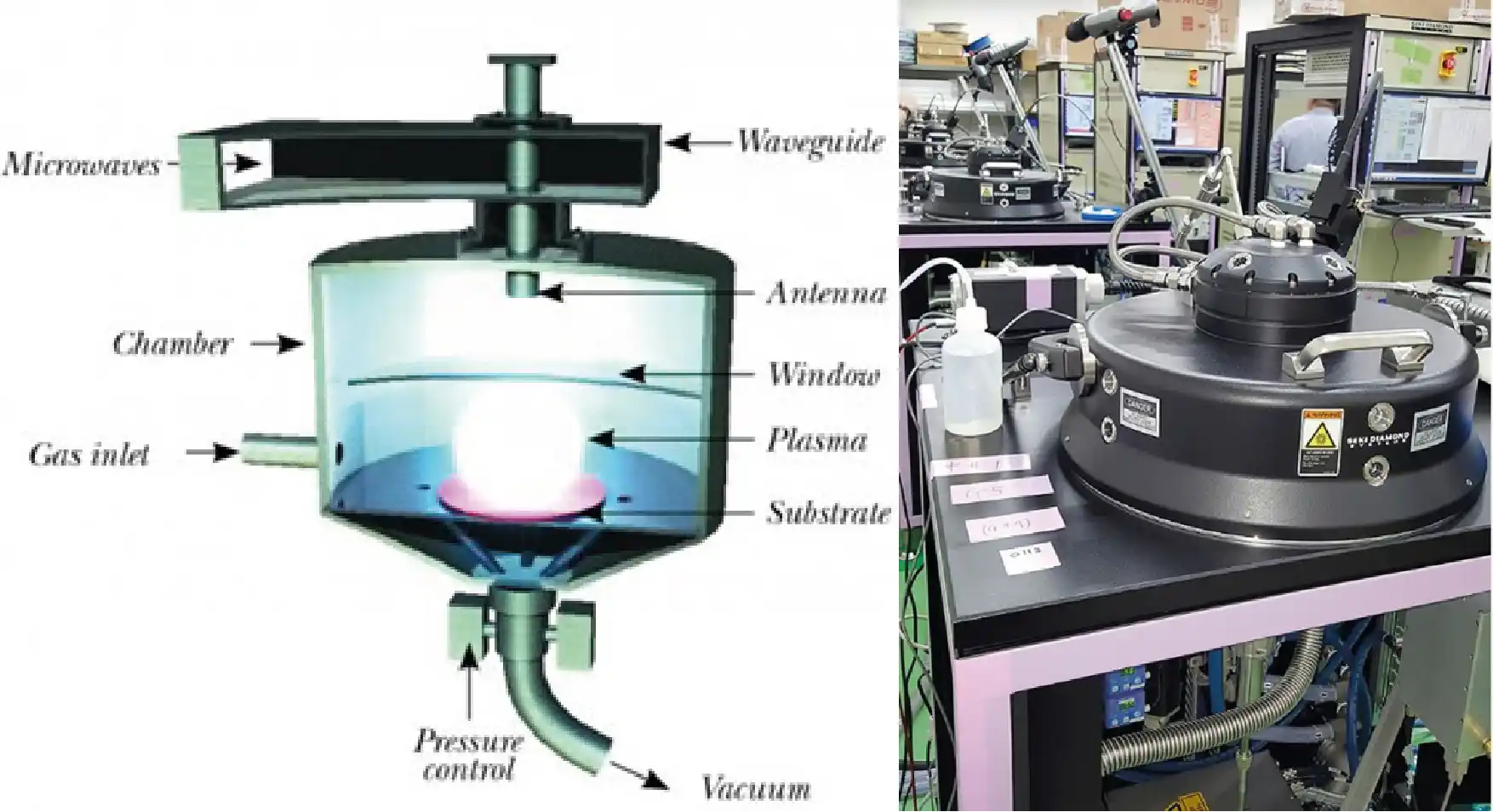
lab-grown diamonds cvd

In the CVD process, a gas phase is used to deposit carbon onto a substrate, which can be a natural diamond or another material such as silicon. A carbon-containing gas, such as methane, is introduced into a reaction chamber and is ionized to form plasma. The ionized carbon then deposits onto the substrate, creating a diamond layer. This process can be controlled to deposit thin layers of carbon on top of each other, allowing diamonds to grow gradually. Once growth is complete, the diamond can be removed from the reaction chamber and processed as needed.

In both processes, high-quality diamonds can be obtained with a wide range of applications, ranging from gem-quality crystals used in jewelry to industrial diamonds. The choice between HPHT and CVD often depends on the specific needs of the final product and the preferences of the manufacturer.

ADVANTAGE associated with lab-grown diamonds:
the ADVANTAGE of lab-grown diamonds
  1. Environmental Sustainability: Not requiring mining, so lab-grown diamonds do not contribute to the environmental destruction associated with mining natural diamonds.

  2. Ethics: Eliminate problems associated with the sourcing of natural diamonds, such as child labor and armed conflict.

  3. Price: Because lab-grown diamonds can be produced on a large scale, they are not as rare as natural gems. This difference in rarity is reflected in the price, making lab diamonds significantly more accessible than natural ones.

  4. 4. Controlled Quality: Lab-grown diamonds are produced in controlled environments, which allows for greater control over the quality and clarity of the diamond.

  5. 5. Custom Choice: Since lab-grown diamonds can be produced on demand, there are more options available to customize the diamond’s characteristics as per customer preferences.

DISADVANTAGES of Lab Grown Diamonds
DISADVANTAGES of Lab Grown Diamonds

However, there are also some disadvantages associated with lab-grown diamonds:

  1. 1. Perception of Value: Some people believe that lab-grown diamonds do not have the same value as natural diamonds, due to their artificial origin.

  2. 2. Prestige: Some buyers may be attracted to the rarity and uniqueness of natural diamonds, considering them a symbol of social status.

  3. 3. Colors and Inclusions: Some lab-grown diamonds may have colors and inclusions that are different from those of natural diamonds, which could affect their aesthetic appeal.

In conclusion, lab-grown diamonds offer a valid alternative to earth-mined diamonds, with numerous advantages in terms of sustainability, ethics, price and controlled quality. However, it is important to also consider the disadvantages and make an informed choice based on your preferences and priorities. With a growing demand for sustainable and ethical alternatives, lab-grown diamonds are becoming increasingly popular on the jewelry market.

Why does Bon Gioielli sell Lab Grown?

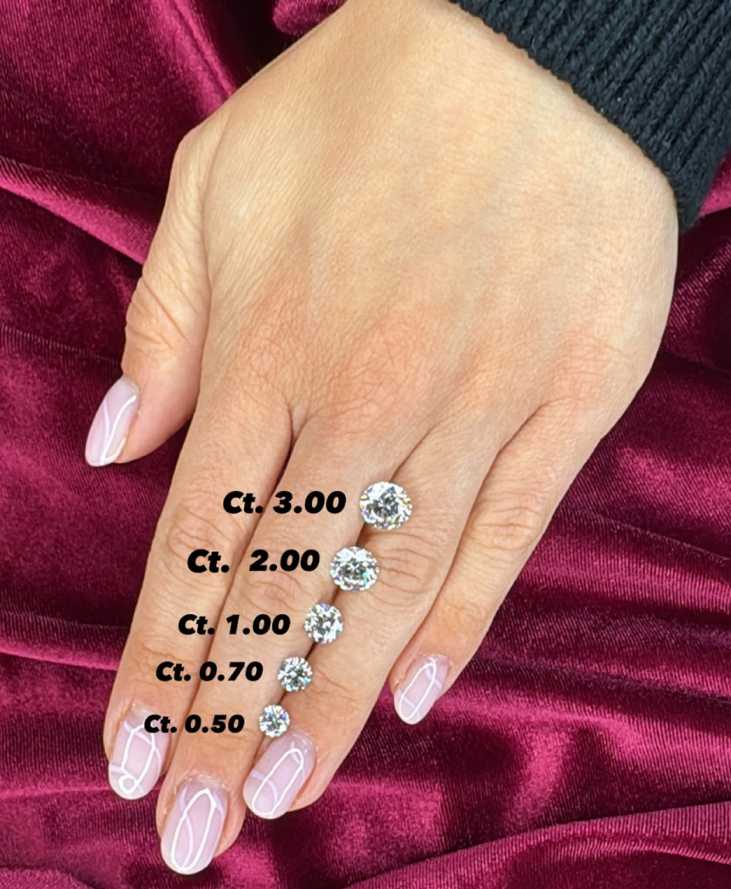
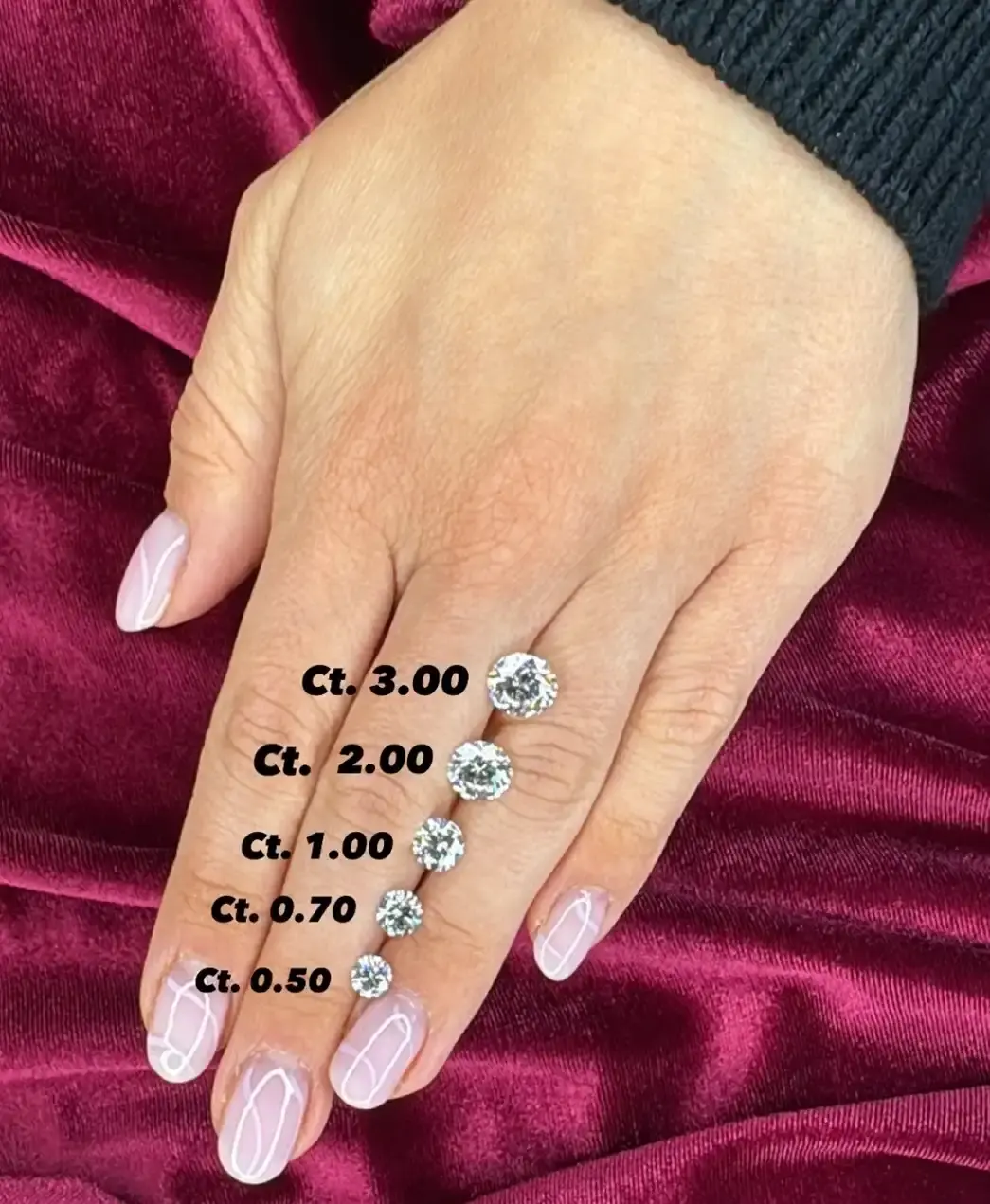
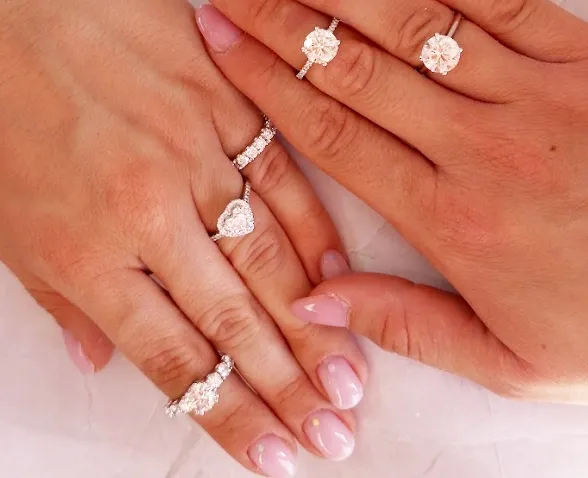
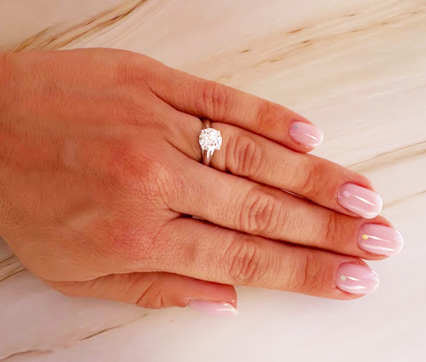
Consider the Proportion of the Hand

We believe that the future represents our most precious luxury.
We firmly believe in nature conservation.
We believe that human wisdom leads to wonderful innovations.
We believe in the power of collaboration.
We believe in boldness and embracing an enterprising future.
Our mission is to embrace the optimism and possibilities offered by sustainably created diamonds, allowing everyone to appreciate them without guilt.
We fervently dream of a world where the absence of mining is a tangible reality, where the beauty of diamonds is not tainted by negative environmental impacts.
This dream encourages us to live with passion and dedication, to love diamonds in all their forms, knowing that our choice is ethical and responsible.
Five Tips for Finding a 1 Carat Natural Diamond in Your Budget

Natural Diamonds Engagement Rings

Five Tips for Finding a 1Carat Natural Diamond in Your Budget: Don’t know how? We’ll help you! We’ll help you!

Size or Beauty? Choose the perfect diamond for you!

Many want the biggest diamond possible, but at what cost? Sacrifice quality and beauty for an extra carat? Fortunately, times have changed!

Today, diamonds uniqueare increasingly appreciated: antique cuts, warm shades, unusual shapes. Stones with character, personality and individuality.

Don’t get us wrong, a D-IF diamond is still valuable, but for many it is inaccessible. People initially only wanted perfect diamonds, while today they want the beauty of nature.

In the Bon Gioielli Team we are always attentive to the latest trends, in Italy lhe average natural diamond engagement ring size is just over half a carat, but more and more people want larger stones.

If you also think that a 1 carat natural diamond is out of your price range, stay with us because we have asked the experts for advice on how to find a beautiful stone without spending a fortune. Let’s begin!

1. Don’t get stuck on the 4Cs

Forget the 4Cs! The true beauty of a diamond lies in its personal charm. Start your search by exploring a wide range of stones and let your instincts guide you. What wins you over? Which diamond goes perfectly with your style and skin?
Many believe they have to choose a specific color and clarity, based solely on the 4Cs, but it often happens that they try diamonds with slightly warmer shades and often fall in love with them.

There are gorgeous SI (slightly included) diamonds with small blemishes on the side, hidden by the setting. These represent great value, with 1-carat rings starting from around €3,000.

The message is clear: don’t let the 4Cs limit you! Find the diamond that reflects your personality and tastes.
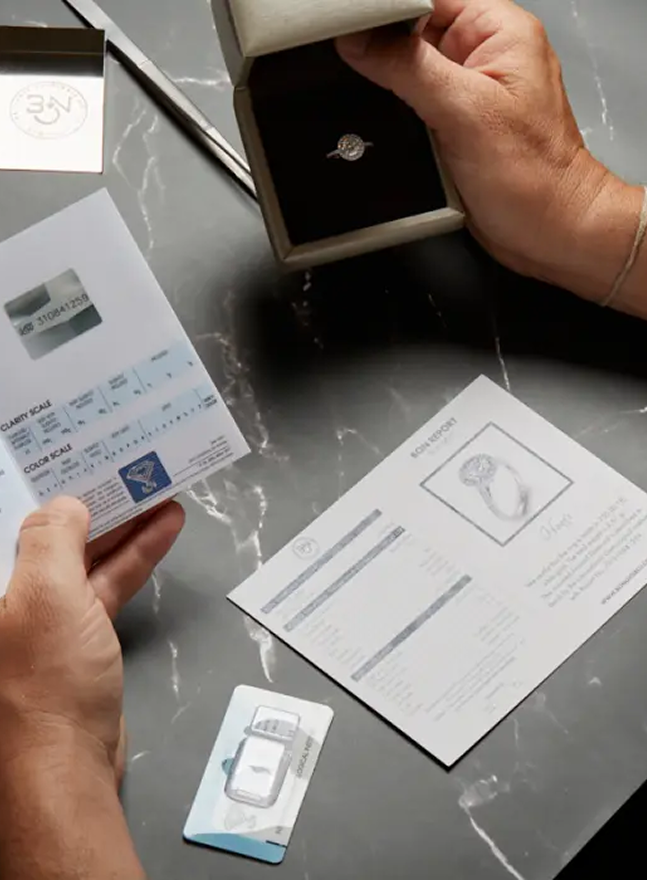
Once you have chosen your diamond, don’t forget to request the certificate!

2. Warmer colored diamonds can be beautiful

Some customers love diamonds come on warm colors, like yellow and champagne brown that shine beautifully onyellow or rose gold. The diamonds very white they are not for everyone, it’s a matter oftaste!

High-end designers and jewelers choosewarm whites, shades of yellow and champagne colourfor their creations.

Unique diamonds, with personality and character.

Choose your diamond: classic white orenveloping warmth? The important thing is that it is a jewel that reflects yours style.

3. Prioritize the cut or shape of the diamond

Hide imperfections, enhance beauty!

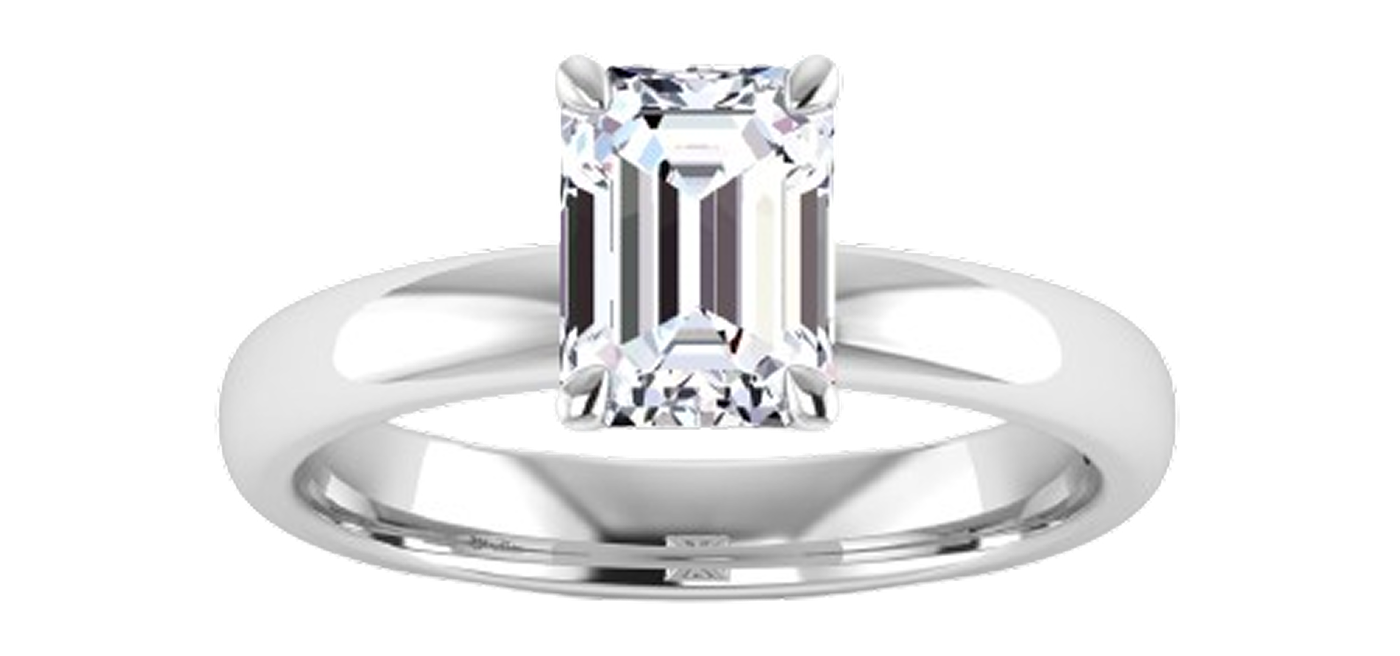
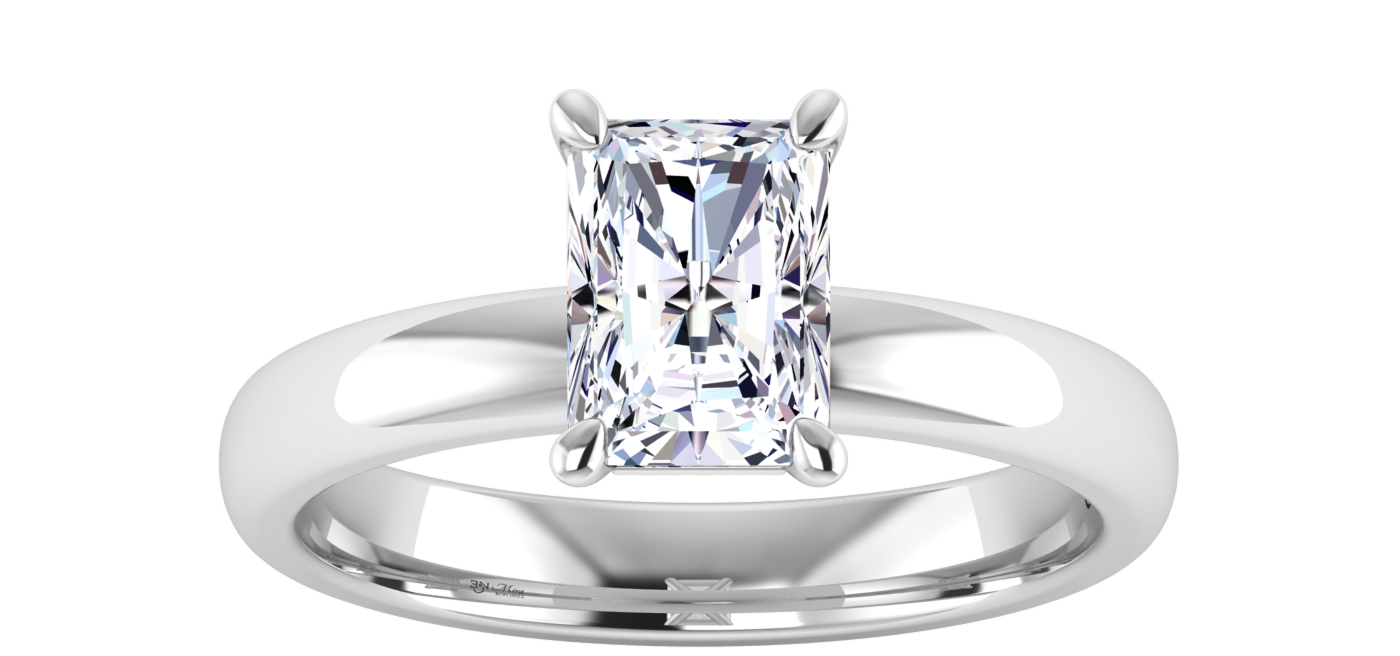
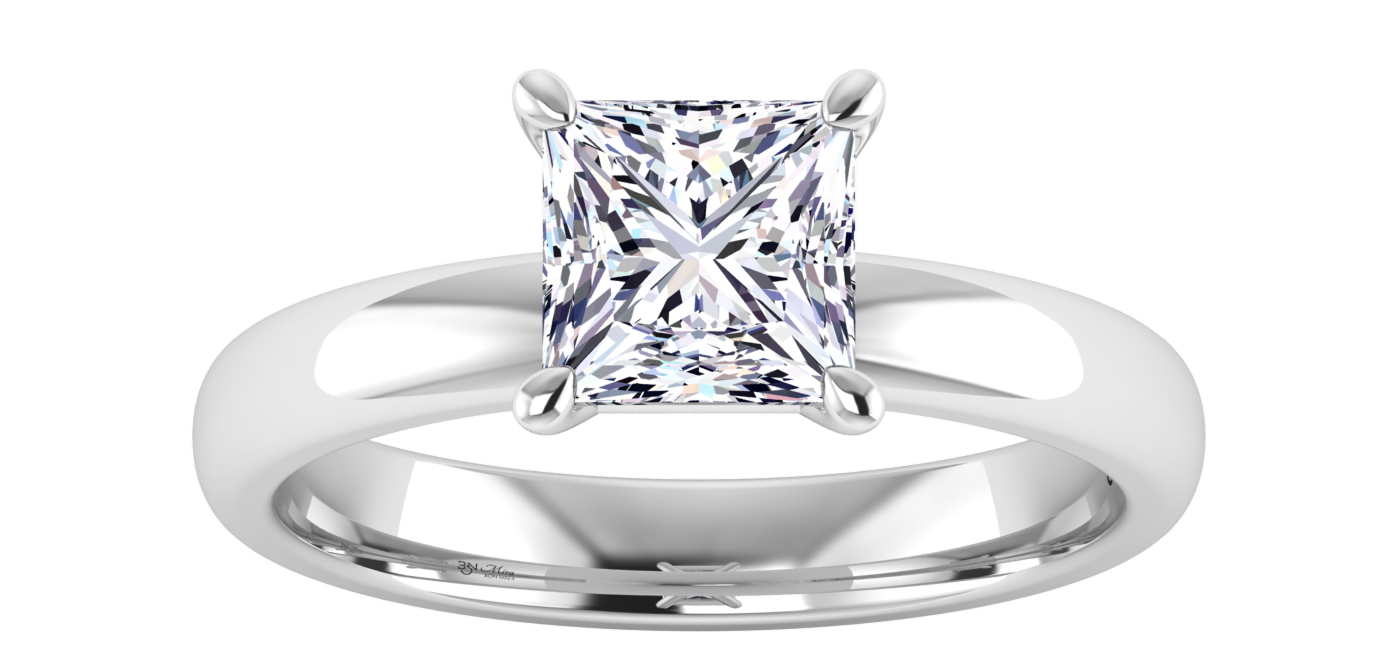
Brilliant, radiant or princess cut diamonds? All 3 are excellent choices for hiding small inclusions. On the contrary, Asscher emerald cuts, with fewer facets, tend to reveal them more.

An optimal cut not only camouflages defects, but (in addition to shine) sublimates the color of the diamond. Perfection is not necessary to own a gemstone!

4. Ask about the size of the diamond

It’s not all about carat weight: two 1-carat round brilliant-cut diamonds can look very different; one might be flatter and wider, while the other deeper. You can get a 1 carat diamond that actually looks like a 1.50 carat diamond. Cuts with a larger diameter and shallower depth cover a larger portion of the finger and give the illusion of a diamond that is much heavier than reality.

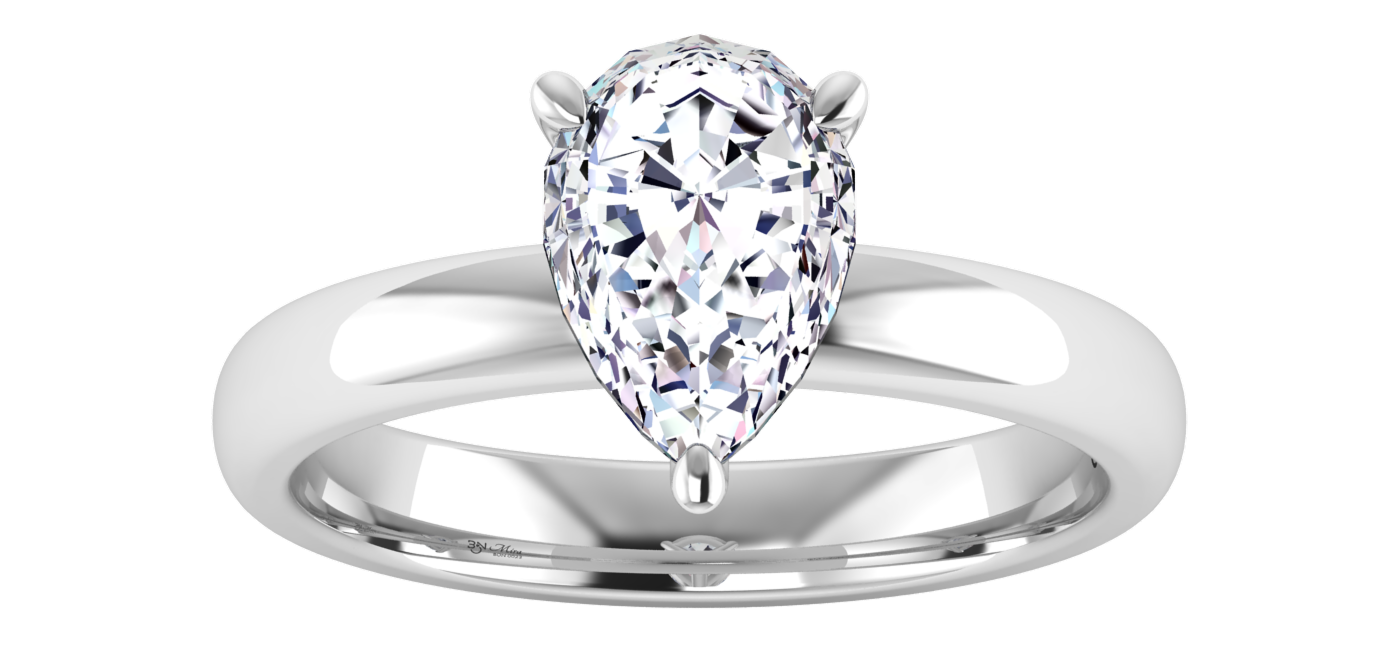
Shoppers looking for diamonds that appear larger should opt for elongated oval, pear, and marquise shapes, which appear larger. However, some people are reluctant to overdo it. “Customers say, ‘I want a substantial size, but not so big that people think it’s lab-grown.

5. Consider antique diamonds

Antique diamonds are not only fascinating, but they also represent an excellent investment Old European and old mine, with their generous facets, tend to appearwhitercompared to modern diamonds of the same color classification.

Don’t let the certified color fool you! An antique diamond rated J, K or I can shine beautifully, especially when set in a yellow gold ring.

Additionally, antique diamonds give off awarmth and romanceunique, irresistible for many.

Diamond Engagement Ring

Thanks to a bit of creativity and the right advice, you can find the perfect stone for you, without going over your budget. It has never been so simple.

Bon Gioielli: where you can find more than just jewels, useful information for your purchases and a trusted gemologist who looks out for YOUR interests!

Discover the Paraiba Tourmaline with us

Paraiba Tourmaline

History, Properties and Beauty

The Paraiba tourmaline is one of the rarest and most fascinating gems in the world. Its vibrant blue-green colors and unique luminosity have captured the attention of jewelers and collectors since its discovery. In this article, we will explore the history of Paraiba tourmaline, its extraordinary properties, and what makes it one of the most desired gemstones.

The History of Paraiba Tourmaline

Paraiba tourmaline takes its name from the state of Paraíba, Brazil, where it was first discovered in 1989 by a Brazilian miner named Heitor Dimas Barbosa. Barbosa had spent years searching for this unique gem, convinced that there was something special in the hills of Paraíba. His determination was rewarded when he discovered the first Paraiba tourmaline, characterized by a never-before-seen neon blue color. This discovery revolutionized the gem market. The combination of rarity and beauty meant that Paraiba tourmaline quickly became one of the most sought after stones. In subsequent years, other deposits of Paraiba tourmaline were found in Nigeria and Mozambique, but the Brazilian variety remains the most prized and expensive.

The Properties of Paraiba Tourmaline

Color

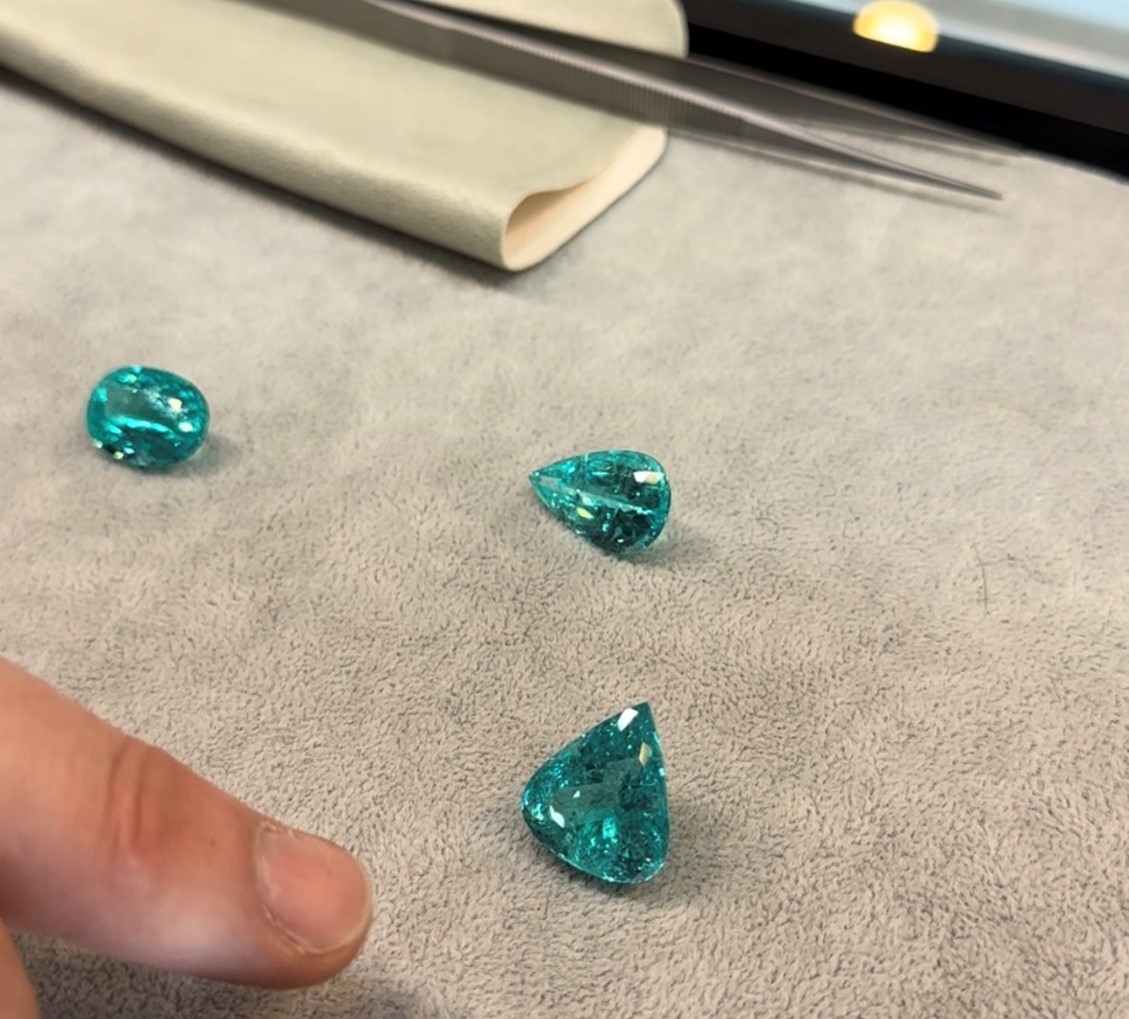
Color is undoubtedly the most distinctive feature of Paraiba tourmaline. The tones range from electric blue to aqua green, with an intense brightness that seems to shine from within the stone itself, but the most beautiful color in our opinion is turquoise. This unique color is due to the presence of traces of copper and, in some cases, manganese.

Brightness and Transparency

Paraiba Tourmaline is known for its extraordinary brightness, making it almost phosphorescent under light. This effect is due to its particular chemical composition and crystalline structure, which allow light to reflect and refract in ways that few other gems can match.

Hardness and Durability

The stone boasts a hardness of 7-7.5 on the Mohs scale, Paraiba tourmaline is durable enough to be used in everyday jewelry. However, like all precious gemstones, it requires care to avoid scratches and damage.

The Beauty of Paraiba Tourmaline

Paraiba tourmaline is celebrated for its hypnotic beauty. Its vibrant colors and brightness make it a perfect gemstone for exclusive and high-class jewelry. Necklaces, rings and earrings adorned with Paraiba tourmalines are symbols of elegance and sophistication, often associated with celebrities and special occasions.

Each piece of Paraiba tourmaline jewelry is unique, as color shades can vary greatly even within the same stone. This makes each jewel an unrepeatable work of art, capable of capturing light and attention in an incomparable way.

Do you know what the most famous Paraiba in the world is?

The Ethereal Carolina Divine Paraiba

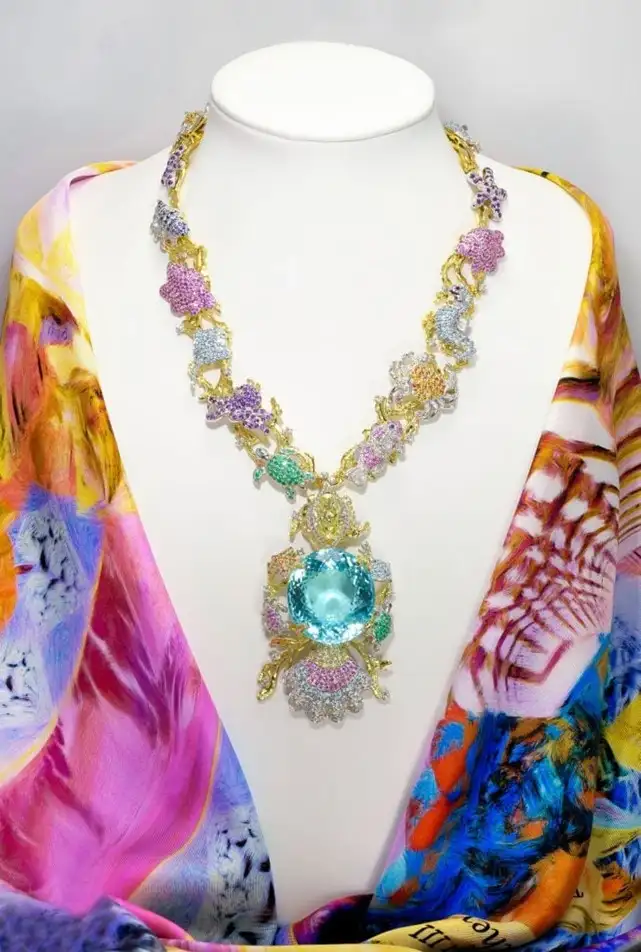
The legendary Ethereal Carolina Divine Paraiba, a neon blue Paraiba tourmaline, is the central focus of the extraordinary “Paraiba Star of the Ocean Jewels” necklace, created by Canadian jeweler Moneca Kauffman. This necklace belongs to billionaire Vincent Boucher. The stone is the largest Paraiba tourmaline ever discovered, weighing 191.87 carats, and holds the Guinness World Record for the largest cut Paraiba tourmaline in the world.

Paraiba Star of the Ocean Jewels Necklace

Originally discovered in 1987 in the Batalha mine in Paraiba, Brazil, the Paraiba tourmaline is extremely rare and coveted. Vincent Boucher, founder and CEO of Billionaire Business Enterprises, Inc., purchased this precious gem in May 2009 and included it in his company’s Planetary Gemstone Collection, hoping it will become the premier collection of colored gemstones in the world.

In 2013, Boucher commissioned Moneca Kauffman to design a necklace that highlighted the beauty of the neon blue paraiba. After six months of work with master jeweler Patrick Gravelle, the necklace was born, adorned with 1,706 brightly colored gemstones, inspired by the sea and the health of the oceans. Paraiba Tourmaline represents the earth’s plants, composed of 70% Oceans. Among all the other precious gems in the necklace, the 10.73-carat yellow diamond stands out in particular, representing the sun and our inner light, illuminated by the beauty of creation.

The necklace was officially unveiled on October 18, 2013, with initial plans to auction it in 2014. However, the auction was canceled and, to this day, the necklace remains the property of Vincent Boucher.

The combination of rarity, beauty and symbolism makes the Ethereal Carolina Divine Paraiba and the “Paraiba Star of the Ocean Jewels” necklace among the most extraordinary treasures in the world of jewelry.

The Paraiba tourmaline is a gem that enchants and fascinates anyone lucky enough to admire it. Its fascinating history, its extraordinary properties and its incomparable beauty make it one of the most sought-after gemstones in the world. If you are a gem enthusiast or simply appreciate the finer things in life, the Paraiba tourmaline is a treasure worth discovering and admiring.

Continue to discover the world of gems with Us, in Bon style: Brilliant, Original and New!

How to Choose the Diamond Carat for Your Engagement Ring

7 + 1 Tips on How to Choose the Carat of Diamond for Your Engagement Ring

Choosing an engagement ring is a special and significant moment in every couple’s life. Among the many decisions to be made, one of the most important is the choice of diamond carat weight. Carat not only determines the size of the diamond, but also affects the overall appearance and value of the ring. In this blog, we’ll walk you through the main factors to consider when choosing the ideal diamond carat weight, helping you make a choice that satisfies both your desires and those of your partner.

1. Understanding Carat

Carat (Ct) is the unit of measurement that indicates the weight of a diamond, with one carat equal to 0.2 grams. Although it is an indicator of size (diameter), carat weight is only part of the equation. The cut, shape and proportion of the diamond influence the visual perception of its size.

choosing the carat of your diamond

2. Balance the Budget

The budget is a crucial element in choosing the caliber. Higher carat diamonds tend to be significantly more expensive. It is essential to establish a realistic budget that includes both the diamond and the ring design. Bon Gioielli offers an excellent quality/price ratio, guaranteeing high quality GIA and IGI certified diamonds, both natural and laboratory, allowing you to find the perfect ring without compromises.

3. Consider Your Partner’s Preferences

Understanding your partner’s tastes and preferences is crucial. Some people prefer a larger diamond for a more impactful visual effect, while others may appreciate a smaller but higher quality stone. Look carefully at the type of jewelry your partner usually wears to get an idea of his or her preferences.

4. Evaluate the Ring Design

The design of the ring plays an important role in choosing the carat weight of the diamond. For example, a classic solitaire highlights the central stone, while a ring with diamonds set around it can enhance a lower carat central stone. Bon Gioielli’s collection includes classic solitaires, diamond-set solitaires and options with diamonds along the shank, allowing you to find the ideal combination.

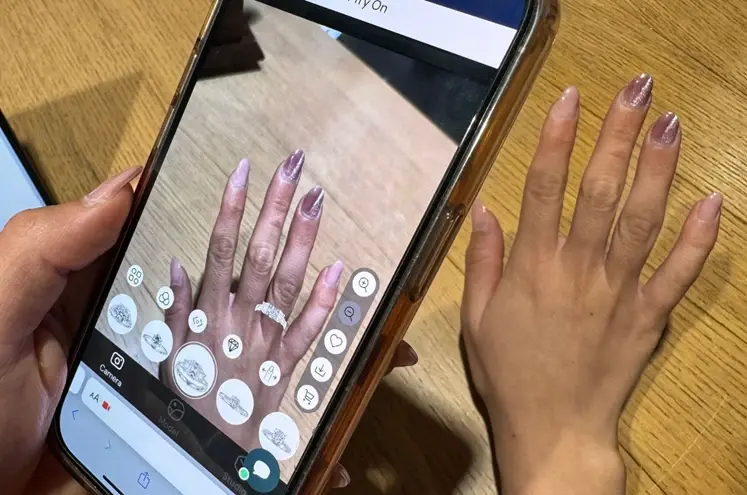
5. Use the AR Virtual Try-ON

Bon Gioielli offers an innovative virtual “Try On” service available on the mobile version of our website, which allows you to see how the diamond looks on your finger. This tool is extremely useful for viewing different diamond sizes and finding the one that best suits your partner’s preferences.

AR Virtual Try-On

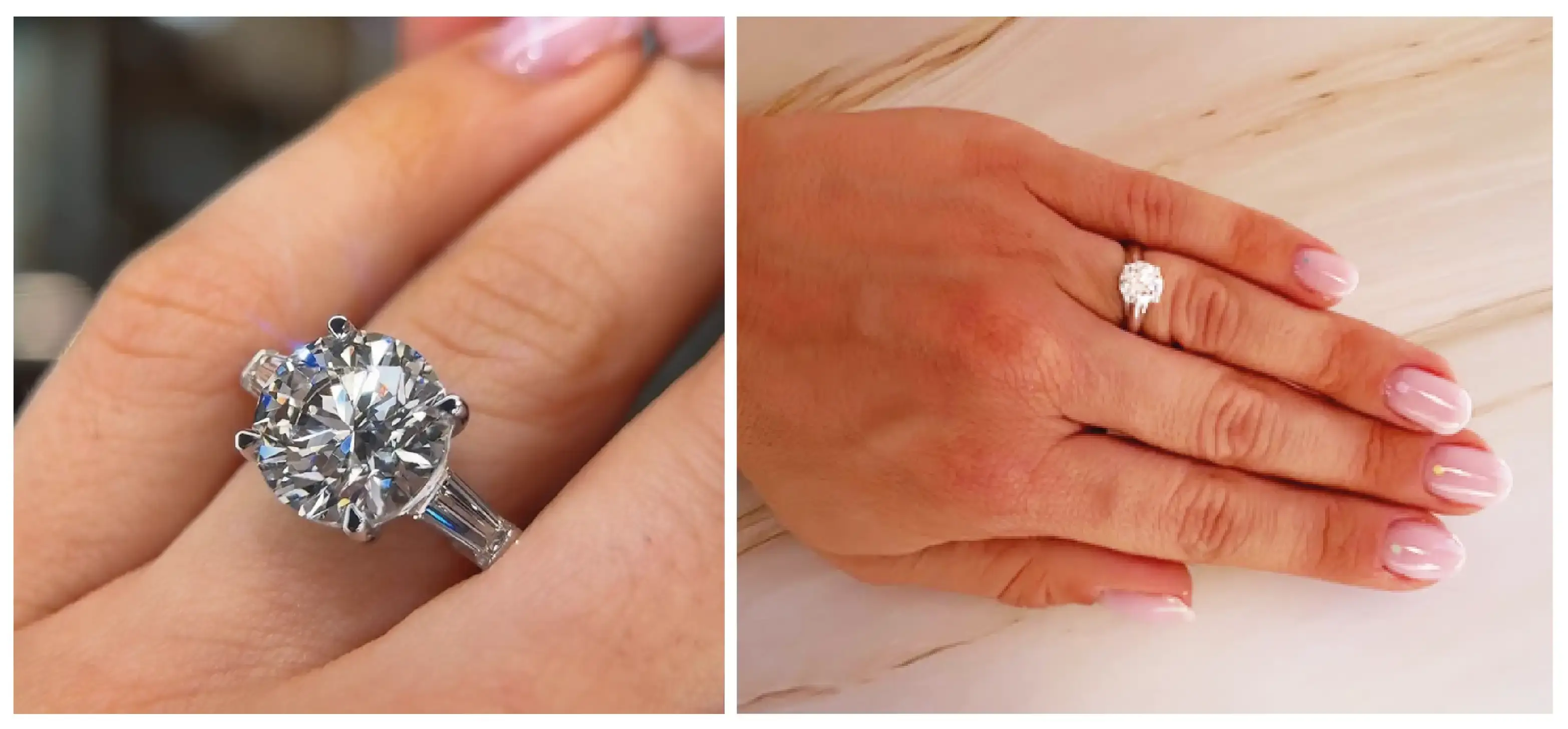
6. Consider Proportion in Hand

The size and shape of the recipient’s hand are factors to carefully consider. A large diamond may look disproportionate on a petite hand, while a smaller stone may not have the same visual impact on a larger hand. Take these proportions into consideration to ensure the ring is perfect.

Consider the Proportion of the Hand

7. Enhance Quality

The quality of the diamond is just as important as its carat weight. The famous 4Cs (Carat, Cut, Color, Clarity) determine the beauty and value of a diamond. A high-quality diamond with excellent cut, superior color and clarity, can shine brighter even if it is lower in carat weight. At Bon Gioielli, each diamond is selected and certified to guarantee the highest quality.

8. Professional Consulting

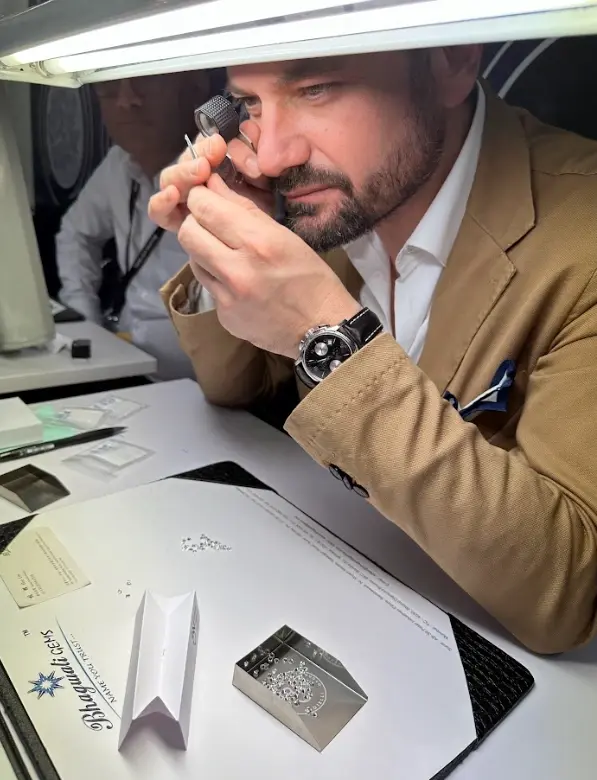
Expert advice can make the difference in choosing the ideal diamond. Francesco Bon, founder of Bon Gioielli and internationally renowned gemologist, offers specialized consultancy and personally supervises every phase of the creation of the rings. His experience will guide you in choosing the perfect diamond, ensuring that every detail is taken care of with the utmost attention.

Professional Consulting

Conclusion

Choosing the diamond carat weight for your engagement ring is a personal and meaningful decision that reflects your love and commitment. By carefully considering your budget, partner’s preferences, ring design, hand proportion, and diamond quality, you can make an informed and satisfying choice. Bon Gioielli is here to support you every step of the way on this journey, offering a combination of professionalism, attention to detail and passion for the art of jewellery. With our help, you will find the perfect engagement ring that will embody your everlasting love.