De Beers: A Sustainable Future for Natural Diamonds


De Beers: Verso un Futuro Sostenibile per l’Industria dei Diamanti Naturali

Spotlight on De Beers Hong Kong

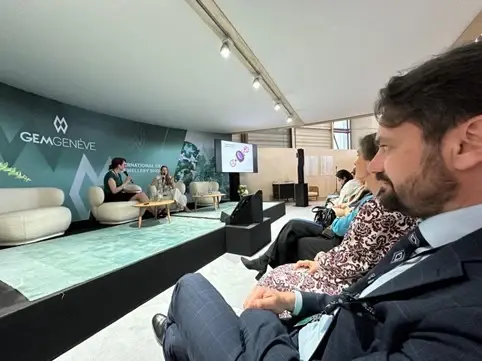
Il 19 settembre 2024, la De Beers ha ospitato un seminario che ha riunito esperti del settore, tra cui Francesco Bon, fondatore di Bon Gioielli e gemmologo, per discutere le sfide e le opportunità nel campo della sostenibilità nell’industria dei diamanti. Durante l’evento, è emerso chiaramente il forte impegno dell’azienda verso un futuro ad emissioni minime di carbonio e la protezione della biodiversità, temi di fondamentale importanza in un’epoca in cui la consapevolezza ambientale è in costante crescita.

L’impegno della De Beers per un impatto positivo

La De Beers ha sottolineato la responsabilità di operare in armonia con la natura, consapevole che i diamanti naturali provengono dalle profondità della Terra e che l’industria mineraria può avere un impatto significativo sull’ambiente. L’azienda si è quindi impegnata non solo a ridurre al minimo il proprio impatto ambientale, ma anche a garantire che le proprie operazioni contribuiscano positivamente alla conservazione della biodiversità. Questo approccio è diventato parte integrante della loro strategia, con l’obiettivo di custodire il pianeta per le generazioni future.

Responsabilita estrazione Diamanti futuro sostenibile

Francesco Bon ha commentato con entusiasmo questo approccio innovativo, sottolineando l’importanza di una visione che vada oltre la semplice estrazione. “L’industria dei diamanti ha il potere di generare un cambiamento positivo. Ogni diamante rappresenta un viaggio, non solo geologico, ma anche umano. È fondamentale che ogni passo del processo sia guidato dalla sostenibilità e dalla responsabilità,” ha affermato Bon.

Il progetto “Building Forever”

Un aspetto centrale del seminario è stato il progetto “Building Forever”, attraverso il quale la De Beers ha delineato dodici ambiziosi obiettivi da raggiungere entro il 2030. Questi obiettivi si concentrano su quattro pilastri fondamentali:

1. Pratiche Etiche: Guidare l’industria verso standard più elevati, promuovendo pratiche responsabili e trasparenti.

2. Comunità Fiorenti: Collaborare con le comunità locali per garantire che le loro vite e mezzi di sussistenza siano migliorati grazie all’industria dei diamanti.

3. Protezione e conservazione della Natura: Adottare misure concrete per proteggere la biodiversità e ridurre l’impatto ambientale.

4. Accelerazione delle Pari Opportunità: Promuovere l’uguaglianza e il rispetto dei diritti umani in tutte le operazioni.

Questi obiettivi sono fondamentali non solo per il futuro della De Beers, ma anche per l’intero settore dei diamanti. “È nostro dovere garantire che ogni diamante che scopriamo aiuti le generazioni future,” ha ribadito Francesco Bon, evidenziando l’importanza di un approccio olistico alla sostenibilità.

Iniziative Concrete e Innovazioni

Durante il seminario, De Beers ha presentato diverse iniziative significative, tra cui il Best Practice Principles Assurance Programme (BPP), introdotto nel 2005. Questo programma ha elevato gli standard etici, sociali e ambientali nel settore, garantendo che oltre 350.000 lavoratori siano oggi protetti da questi rigorosi criteri. L’azienda si impegna a evolvere continuamente il BPP per garantire alti livelli di responsabilità e trasparenza nel settore.

In aggiunta, De Beers ha lanciato nel 2018 il programma GemFair™, progettato per migliorare le condizioni di lavoro dei minatori. Questo programma non solo promuove pratiche etiche, ma punta anche a creare un modello di sostenibilità replicabile a livello globale, contribuendo così a una trasformazione positiva nell’industria mineraria.

Conclusioni

Il seminario della De Beers del 19 settembre ha rappresentato un importante passo verso un futuro più sostenibile per l’industria dei diamanti naturali. L’impegno della De Beers, supportato da esperti come Francesco Bon, dimostra che è possibile unire bellezza e responsabilità, creando un impatto positivo sulla vita delle persone e sull’ambiente.

Con un focus chiaro sulla sostenibilità e sull’etica, la De Beers sta tracciando un percorso che potrebbe trasformare radicalmente il settore dei diamanti. Mentre il mondo si confronta con le sfide del cambiamento climatico e della perdita di biodiversità, iniziative come “Building Forever” potrebbero non solo garantire il futuro dell’industria dei diamanti, ma anche contribuire a un mondo più giusto e sostenibile.

Seguici su: Instagram, Facebook, TikTok.

Diamond Certification: A Fundamental Tool for an Informed Purchase

Diamond Certification
Diamond Certification
Buying a diamond is a special moment, an act that often represents a symbol of love, commitment or personal success. However, choosing the perfect diamond can be a daunting task, especially when it comes to quality and authenticity. This is why diamond certification becomes a fundamental tool to ensure that your investment is safe and transparent. What exactly is a certification? Why is it so important? In this article, we will answer these questions and delve into other crucial aspects of diamond certifications.
What is Diamond Certification?

A diamond certification is an official document issued by an independent gemological laboratory that certifies the characteristics of the diamond based on scientific criteria. The most renowned and internationally respected laboratories are the GIA (Gemological Institute of America) and the IGI (International Gemological Institute). These institutions are known for their impartiality and competence. The certification serves as a sort of “identity card” of the diamond, providing a detailed description of its characteristics.
Why is Diamond Certification Important?

Having a certification for your diamond is essential for several reasons. First, it ensures that the diamond is genuine and not an imitation or an inferior gem. Second, a certification provides an unbiased and accurate assessment of the diamond’s characteristics, such as cut, clarity, color, and carat weight. This allows you to make an informed purchase, knowing exactly what you are buying. Furthermore, certification is essential if you decide to resell the diamond in the future, as it increases buyer confidence and makes it easier to determine the price.

Diamond Certification

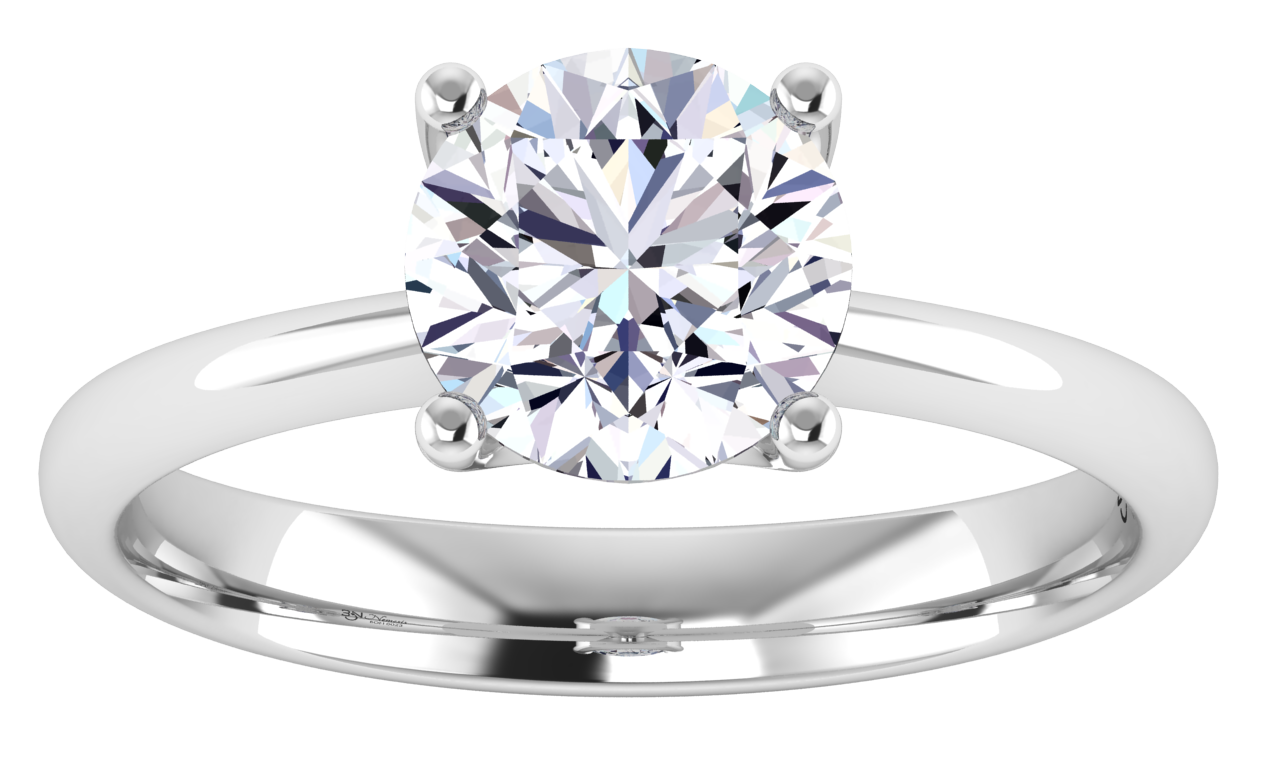
Certified diamonds sold by Bon Gioielli are further enhanced by a laser engraving on the stone’s girdle, made by the gemological institute. During the setting phase, this engraving is carefully positioned so that it is always visible to an inspection, even years after purchase. This additional guarantee offers security and peace of mind, both for the buyer and for those who wish to resell the gem in the future.

What Information Does a Certification Contain?

A diamond certification includes a series of detailed information that describes the physical and optical characteristics of the gem. These include:
Carats: The weight of the diamond, measured in carats.
Color: The color scale, which goes from D (colorless) to Z (fancy color).
Clarity: The presence of inclusions or imperfections, classified according to the IF scale, Internally Flawless (Pure) up to I3 (Evident Inclusions).
Cut: The quality of the diamond’s cut, which affects its brilliance, fire and sparkle. Only a gemological certificate can certify 3EX quality cutting parameters, which maximize the light coming out of the stone.

GIA Diamond Certificate

Are Certifications Valid Everywhere?

The certifications issued by GIA and IGI laboratories are written exclusively in English, and are recognized internationally. This means that, regardless of the country you are in, the certification of a diamond issued by one of these laboratories will have the same value and meaning. Relying on these laboratories guarantees you an accurate and detailed evaluation.

What is the difference between a Certified Diamond and a Non-Certified Diamond?

The main difference between a certified diamond and a non-certified one is the transparency and security of the purchase. A certified diamond is accompanied by a document that certifies its characteristics, while a non-certified diamond requires greater trust in the seller, who will tend not to highlight any defects. Furthermore, without a certification, it is difficult to establish the true value of the diamond, which can lead to paying more than necessary or not being able to resell it at a fair price.

Diamond Certification

Can I Resell the Certified Diamond?

Yes, diamond certification is a crucial element for resale. A certified diamond has a higher market value than a non-certified one, since the certification provides a guarantee of the quality and authenticity of the diamond. This not only makes selling easier, but also allows for a fairer and more transparent price.

Differences Between GIA and IGI Certifications

GIA and IGI certifications are among the most recognized and respected in the world. GIA is often considered the benchmark for diamond certification, with a reputation for the utmost precision and rigor. IGI, on the other hand, is known for its global reach and for certifying mounted jewelry as well as loose diamonds. Both laboratories offer high-quality certifications and Bon Gioielli uses only diamonds certified by GIA or IGI, ensuring 3EX cutting parameters that maximize the beauty of the diamond.

How to Read a Certification?

Reading a certification may seem complex, but once you understand the main terms, it becomes much easier. The most important part of the document is the description of the 4Cs: Carats, Color, Clarity and Cut. These are the fundamental parameters that determine the value of the diamond. Other details, such as proportions and fluorescence, can affect the brilliance and appearance of the gem.

The Value of a Certification

A diamond certification is not just a document, but represents an added value for your investment. An accurate certification can in fact increase the value of the diamond, making it more attractive on the market and ensuring that its price is consistent with its characteristics.

Certifications and Lab Grown Diamonds

Finally, it is important to note that synthetic diamonds, created in a laboratory, can also be certified. However, the certifications for these diamonds clearly specify their origin, distinguishing them from natural diamonds. If you are considering purchasing a laboratory diamond, make sure it comes with an appropriate certification.

IGI Diamond Certification

In conclusion, diamond certification is a crucial element for a conscious and safe purchase. Thanks to certification, not only will you be sure to buy an authentic and quality diamond, but you will also have the possibility of reselling it in the future more easily and at a fair price. When it comes to diamonds, certification is truly the buyer’s best friend.

Follow us: Instagram, Facebook, TikTok.

Carat (Ct) Vs Karat (Kt): The Most Misunderstood Terms in Jewelry

Carati vs Karati Gioielleria Diamanti e Oro

Welcome to the Bon Gioielli blog, where we dedicate ourselves to explaining the wonders of the world of jewelry and clarifying any doubts regarding your precious purchases. Today we want to shed light on one of the most common and sometimes confusing questions among jewelry enthusiasts: the difference between “Carat Ct” and “Karat Kt”. Both terms are fundamental in our industry, but they refer to different things. Here is a complete guide to better understand these concepts.

Carat (Ct) in the World of Diamonds and Gems

Diamond carat weight

What is Carat?

The carat is the unit of measurement for the weight of diamonds and other precious gems. One carat equals 0.2 grams (200 milligrams). This measurement system is standardized internationally and is used to evaluate the weight of gemstones.

Why is Carat Important?

The carat weight of diamonds in engagement rings

The carat weight of a diamond is one of the four main factors (along with color, clarity and cut) that determine its value. In general, the greater the carat weight, the higher the price of the stone, other characteristics being equal. However, a high-quality, well-cut diamond may be worth more than a larger diamond with imperfections.

How Does It Affect Design?

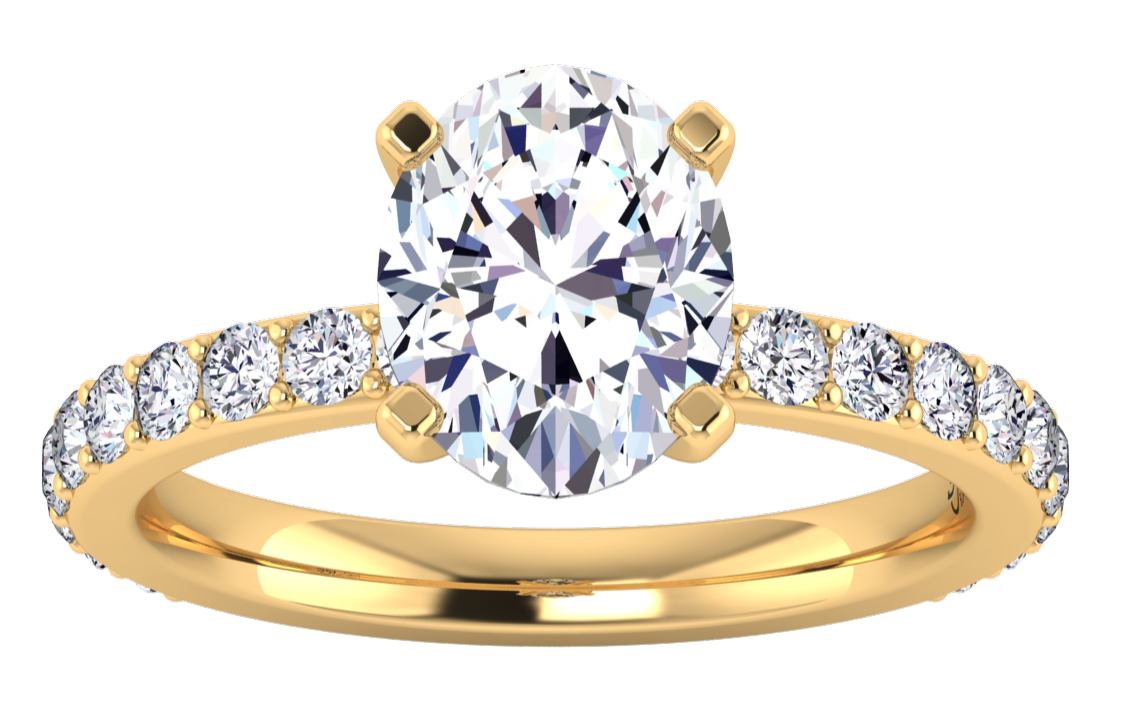
In our engagement ring collection, the carat weight of the main diamond plays a vital role in the final ring design. Whether it’s a classic solitaire or a model with diamonds set along the shank, choosing the right carat can make a big difference in the appearance and value of the jewel.

Karat (Kt) in the World of Gold

What is Karat?

The Karat is a unit of measurement of the purity of gold,comes from the Arabic word,qīrāṭ,”twenty-fourth part”. Pure gold is defined as 24 karat (24Kt), which means it is made up of 24 out of 24 parts gold. However, pure gold is too soft to be used in most jewelry, so it is alloyed with other metals to increase its hardness and durability.

The Different Gold Alloys

– 24Kt: Pure gold, very soft and never used for jewelery worn on a daily basis.
– 18Kt: Contains 18 parts of gold out of 24 (75% pure gold), very popular for its combination of purity and resistance.
– 14Kt: Contains 14 parts of gold out of 24 (58.5% pure gold), harder and more resistant, ideal for jewelery to wear every day.
– 10Kt: Contains 10 parts of gold out of 24 (41.7% pure gold), the minimum allowed to be considered gold in the United States, very resistant but less precious.

Why is Carat Important?

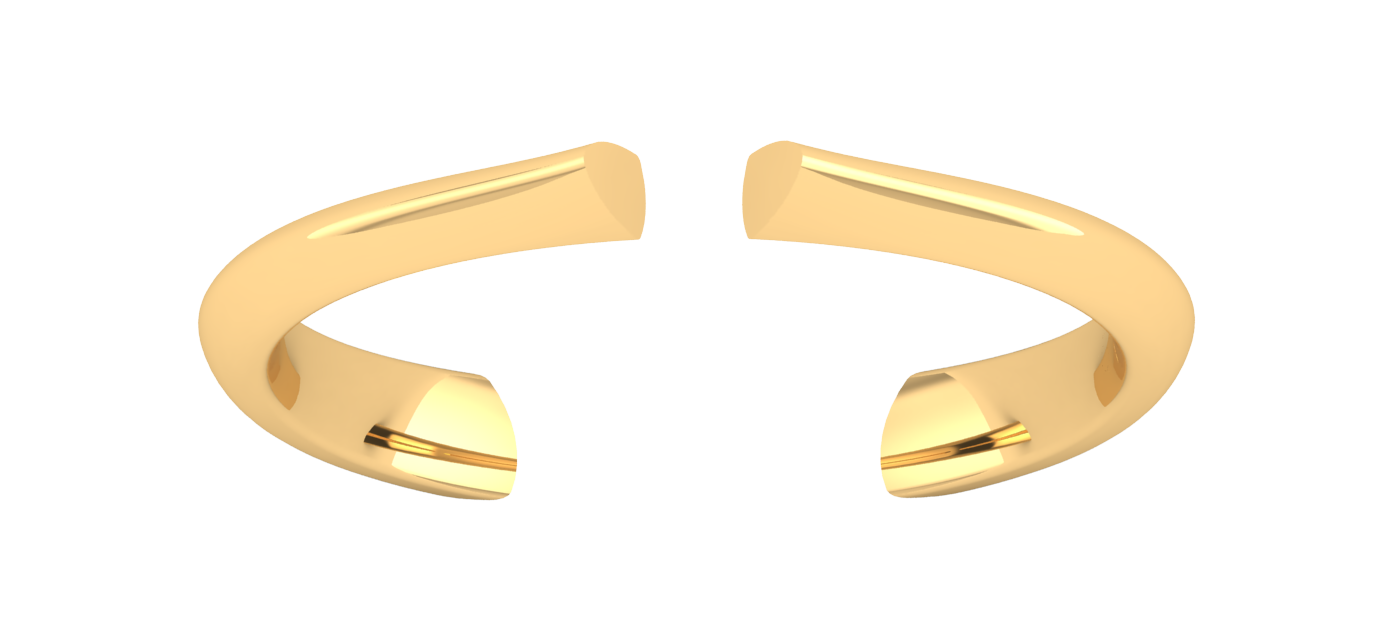
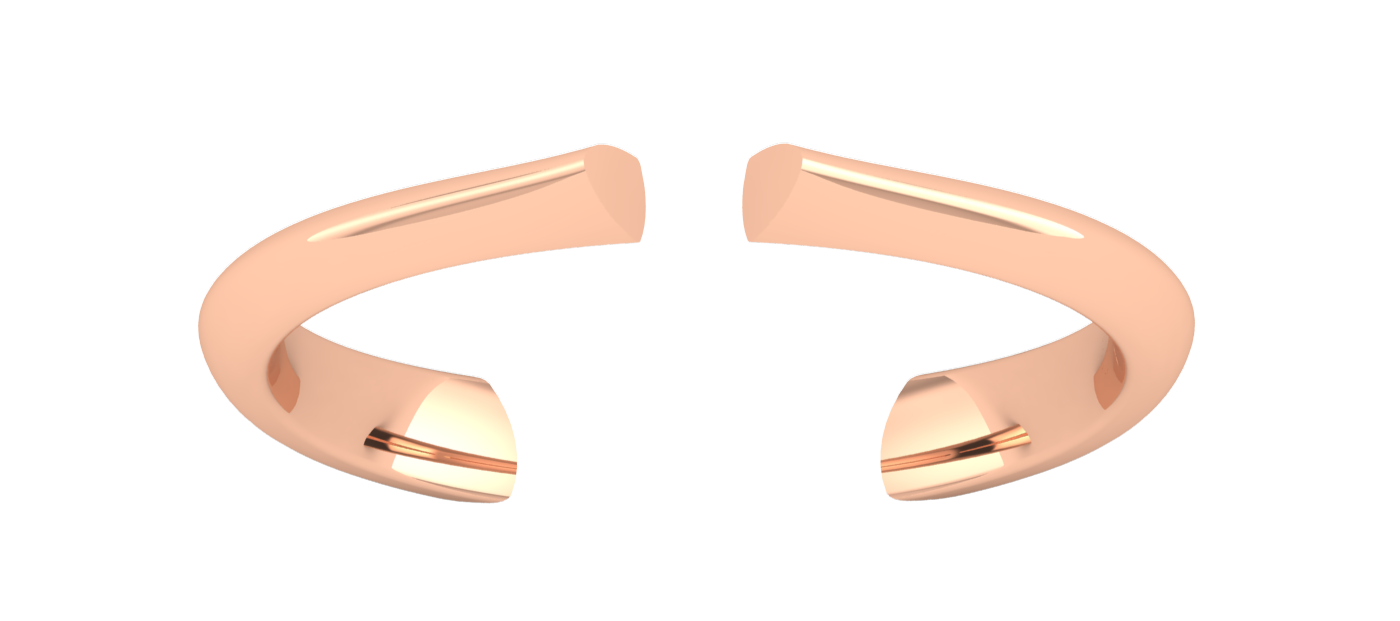
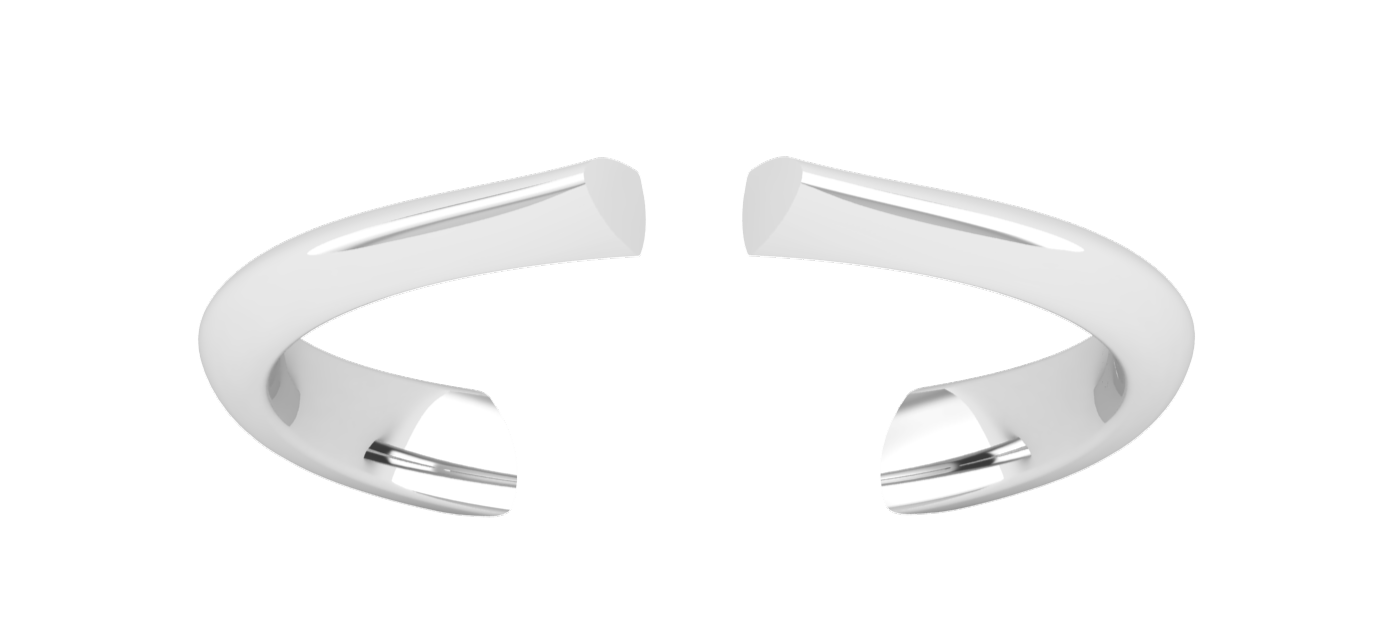
The purity of the gold affects both the color and the resistance of the jewel. For example, 18Kt gold has a richer, deeper color than 14Kt gold, but the latter is more resistant to scratches and daily wear. In Italy, when we talk about gold, we traditionally refer to 18Kt gold. At Bon Gioielli, we offer a range of three gold colors: traditional yellow, copper-plated in the pink variant and rhodium-plated in the white version, all exclusively 18Kt.

Conclusion

The carat weight of diamonds in engagement rings

Understanding the difference between carat (Ct) and carat (Kt) is essential to making an informed choice when purchasing a piece of jewelry. While the Ct carat measures the weight of precious gems, the Kt carat indicates the purity of the gold. Both play a crucial role in determining the value and beauty of your jewelry.

At Bon Gioielli, we are committed to offering only the best, selecting certified diamonds and working with the highest quality gold. Our passion for excellence, combined with the experience of our founder Francesco Bon and our team of experts, ensures that each creation is a unique masterpiece.

We invite you to visit our website and discover how we can help you create the jewel of your dreams, personalized according to your desires and made with the utmost attention to detail. Thank you for choosing Bon Gioielli, where quality and authenticity always shine.

The Fancy Pink Diamond “The Eden Rose”: A Masterpiece Sold for $13 Million

Fancy Pink Diamond

The jewelry world was recently rocked by some stunning news: a stunning natural fancy pink diamond ring, nicknamed “The Eden Rose,” sold for a staggering $13.3 million during Christie’s Magnificent Jewels auction in New York. This sale not only exceeded all expectations but also surpassed pre-sale estimates of $9-12 million, demonstrating the incredible allure and value of rare colored gemstones.

A Masterpiece of High Jewellery

The Fancy Pink Diamond

“The Eden Rose” is a natural deep pink Type IIA diamond (same grading as Lab Grown diamonds), with a round brilliant cut of 10.20 carats. Its exceptional purity and the absence of secondary tones make it one of a kind. This precious diamond is set on an 18 karat rose and white gold ring, surrounded by a halo of drop-shaped brilliant-cut diamonds, with carats ranging from 0.73 to 3.11, and accompanied by two marquise-cut diamonds of 2.24 and 1.02 carats respectively. A true masterpiece that combines elegance and refinement with unparalleled beauty.

An Amazing Success

The June 11 auction raised a total of $44.4 million, with 90% of the 144 lots sold. Other notable lots included a white and colored diamond pendant that sold for $2.16 million, a 2.28-carat fancy vivid blue diamond that fetched $2.1 million, and a necklace with natural pearls and cultivated and diamonds, sold for $378,000.

Auction Rare Diamond 10.20 Carat Fancy Pink Diamond

Rahul Kadakia, international head of the jewelry division at Christie’s, underlined the enthusiasm of collectors during the auction: “Collectors actively participated in all phases of the sale, paying high prices in particular for rare colored gems and pearls natural.”

The Eden Rose: A Unique Jewel

What sets ‘The Eden Rose’ apart is its stunning pink hue. Unlike many natural pink diamonds that feature secondary hues such as brown, orange or purple, the Eden Rose exhibits the purest shade of pink, without any secondary color. This feature makes it even more valuable and desirable among collectors and jewelry enthusiasts.

The Bon Gioielli Experience

If you are fascinated by extraordinary gems like “The Eden Rose” and want to create a unique and personalized jewel, Bon Gioielli is the perfect choice for you. Our jewelry store offers the possibility of personalizing your jewelry directly on our site, with a wide range of engagement ring models, all with diamonds certified by the GIA and IGI. Each creation is supervised by our founder, Francesco Bon, an internationally renowned gemologist who guarantees the highest quality and authenticity.

Our team of expert jewelers and CAD designers work passionately to create unique, high-quality jewellery, offering impeccable service and excellent value for money. With Bon Gioielli, you can be sure of receiving a jewel packaged with care and love, for an unforgettable shopping experience.

Conclusion

The sale of “The Eden Rose” for $13.3 million is an event that celebrates the incredible value and beauty of rare colored gems. For those who wish to own an equally extraordinary and personalized jewel, Bon Gioielli offers an exclusive and high quality service, guaranteeing maximum satisfaction for each customer.

Guide to Lab-grown Diamonds

Guide to Lab-grown Diamonds

Lab-grown diamonds are diamonds produced artificially in a laboratory environment rather than mined from the earth. These diamonds offer the same characteristics as natural diamonds, but are created in a human-controlled process. This comprehensive guide will provide detailed information about lab-grown diamonds, including their characteristics, manufacturing process, advantages and disadvantages compared to natural diamonds, as well as other important information to consider.

lab-grown diamonds

Lab-grown diamonds are known for the following characteristics:

  1. 1. Chemical composition: Lab-grown diamonds are composed exclusively of crystallized carbon, just like natural diamonds.

  2. 3. Crystalline structure: They have the same crystalline structure as natural diamonds, with an arrangement of carbon atoms in a cubic crystalline network.

  3. 3. Hardness: They are extremely hard and have a hardness of 10 on the Mohs scale, the highest possible. This makes them as durable as natural diamonds.

  4. 4. Color:May vary from clear to yellow, brown, blue and other colors, depending on manufacturing processes and impurities present

  5. 5. Clarity: There may be more or less inclusions exactly like natural diamonds.

  6. 6. Cutting and Polishing: They can be cut and polished as precisely as natural diamonds, creating facets that reflect light equally.

Lab-grown diamonds can be produced through two main processes: HPHT (High Pressure High Temperature) and CVD (Chemical Vapor Deposition). Both processes involve creating controlled conditions to encourage the growth of diamonds, but differ in the method used. Below is a detailed description of both processes:

HPHT (High Pressure High Temperature)

HPHT Diamonds

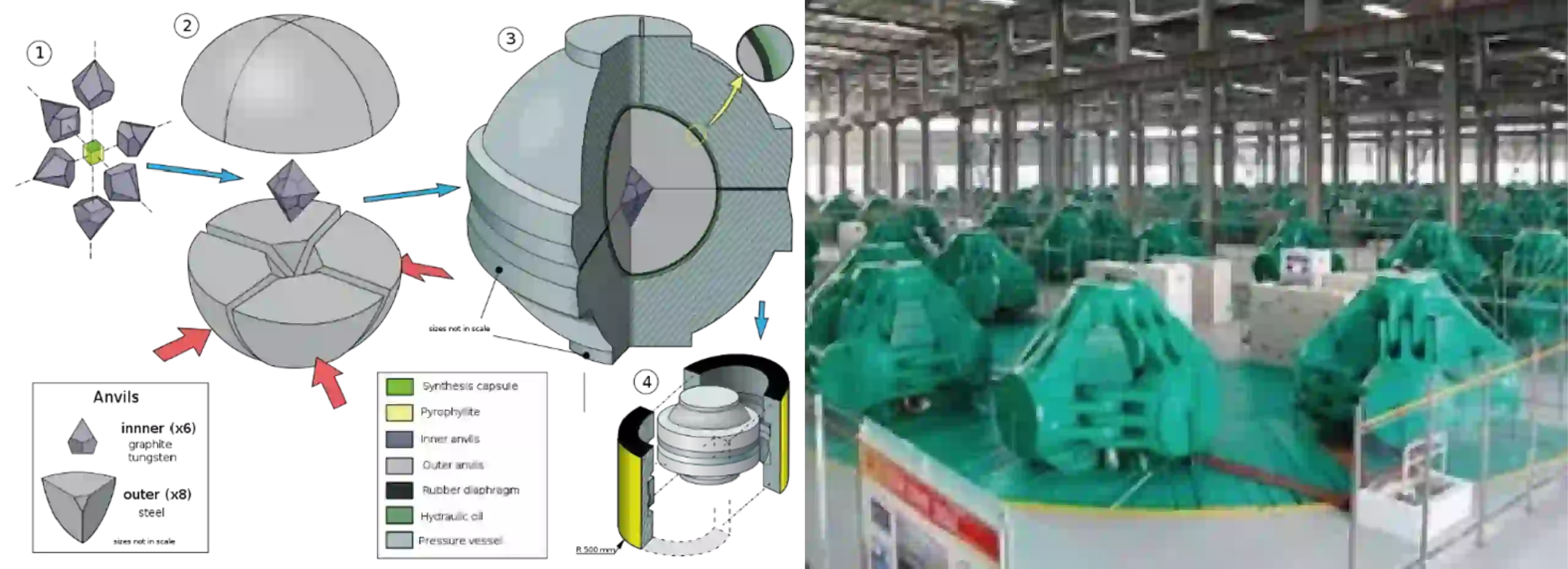
In the HPHT process, high pressures and temperatures are used to create ideal conditions for diamond growth. The carbon is placed in a pressure chamber together with a metal catalyst, such as nickel, and is then subjected to extremely high pressures, similar to those found in the Earth’s mantle. High temperatures and pressures allow carbon to crystallize, forming diamonds. Next, the rough diamond crystals are taken out of the pressure chamber and can be cut and polished to make them suitable for use in jewelry or other applications.

CVD (Chemical Vapor Deposition)

lab-grown diamonds cvd

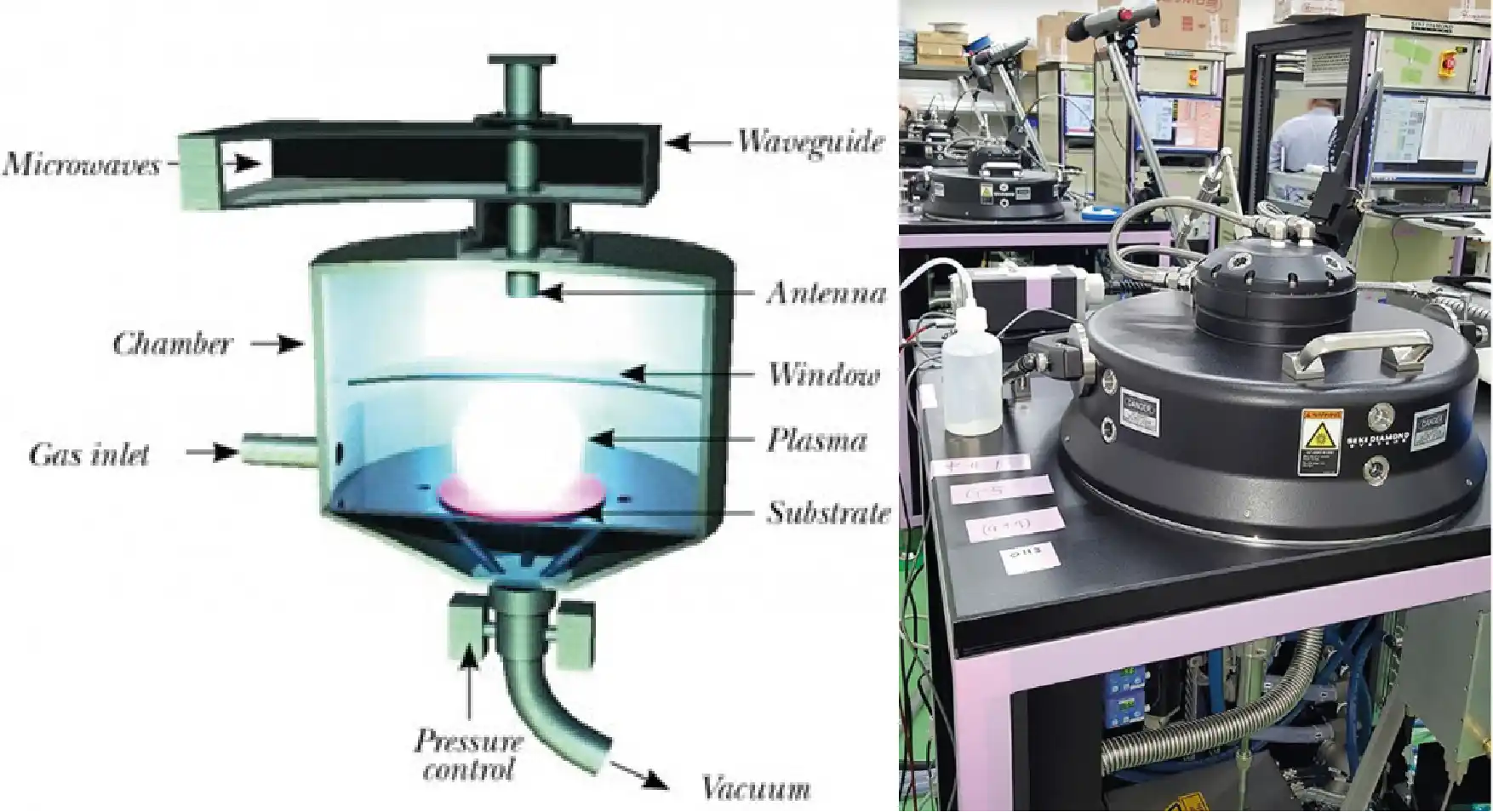
In the CVD process, a gas phase is used to deposit carbon onto a substrate, which can be a natural diamond or another material such as silicon. A carbon-containing gas, such as methane, is introduced into a reaction chamber and is ionized to form plasma. The ionized carbon then deposits onto the substrate, creating a diamond layer. This process can be controlled to deposit thin layers of carbon on top of each other, allowing diamonds to grow gradually. Once growth is complete, the diamond can be removed from the reaction chamber and processed as needed.

In both processes, high-quality diamonds can be obtained with a wide range of applications, ranging from gem-quality crystals used in jewelry to industrial diamonds. The choice between HPHT and CVD often depends on the specific needs of the final product and the preferences of the manufacturer.

ADVANTAGE associated with lab-grown diamonds:

the ADVANTAGE of lab-grown diamonds
  1. Environmental Sustainability: Not requiring mining, so lab-grown diamonds do not contribute to the environmental destruction associated with mining natural diamonds.

  2. Ethics: Eliminate problems associated with the sourcing of natural diamonds, such as child labor and armed conflict.

  3. Price: Because lab-grown diamonds can be produced on a large scale, they are not as rare as natural gems. This difference in rarity is reflected in the price, making lab diamonds significantly more accessible than natural ones.

  4. 4. Controlled Quality: Lab-grown diamonds are produced in controlled environments, which allows for greater control over the quality and clarity of the diamond.

  5. 5. Custom Choice: Since lab-grown diamonds can be produced on demand, there are more options available to customize the diamond’s characteristics as per customer preferences.

DISADVANTAGES of Lab Grown Diamonds

DISADVANTAGES of Lab Grown Diamonds

However, there are also some disadvantages associated with lab-grown diamonds:

  1. 1. Perception of Value: Some people believe that lab-grown diamonds do not have the same value as natural diamonds, due to their artificial origin.

  2. 2. Prestige: Some buyers may be attracted to the rarity and uniqueness of natural diamonds, considering them a symbol of social status.

  3. 3. Colors and Inclusions: Some lab-grown diamonds may have colors and inclusions that are different from those of natural diamonds, which could affect their aesthetic appeal.

In conclusion, lab-grown diamonds offer a valid alternative to earth-mined diamonds, with numerous advantages in terms of sustainability, ethics, price and controlled quality. However, it is important to also consider the disadvantages and make an informed choice based on your preferences and priorities. With a growing demand for sustainable and ethical alternatives, lab-grown diamonds are becoming increasingly popular on the jewelry market.

Why does Bon Gioielli sell Lab Grown?

Consider the Proportion of the Hand

We believe that the future represents our most precious luxury.
We firmly believe in nature conservation.
We believe that human wisdom leads to wonderful innovations.
We believe in the power of collaboration.
We believe in boldness and embracing an enterprising future.
Our mission is to embrace the optimism and possibilities offered by sustainably created diamonds, allowing everyone to appreciate them without guilt.
We fervently dream of a world where the absence of mining is a tangible reality, where the beauty of diamonds is not tainted by negative environmental impacts.
This dream encourages us to live with passion and dedication, to love diamonds in all their forms, knowing that our choice is ethical and responsible.

Five Tips for Finding a 1 Carat Natural Diamond in Your Budget

Natural Diamonds Engagement Rings

Five Tips for Finding a 1Carat Natural Diamond in Your Budget: Don’t know how? We’ll help you! We’ll help you!

Size or Beauty? Choose the perfect diamond for you!

Many want the biggest diamond possible, but at what cost? Sacrifice quality and beauty for an extra carat? Fortunately, times have changed!

Today, diamonds uniqueare increasingly appreciated: antique cuts, warm shades, unusual shapes. Stones with character, personality and individuality.

Don’t get us wrong, a D-IF diamond is still valuable, but for many it is inaccessible. People initially only wanted perfect diamonds, while today they want the beauty of nature.

In the Bon Gioielli Team we are always attentive to the latest trends, in Italy lhe average natural diamond engagement ring size is just over half a carat, but more and more people want larger stones.

If you also think that a 1 carat natural diamond is out of your price range, stay with us because we have asked the experts for advice on how to find a beautiful stone without spending a fortune. Let’s begin!

1. Don’t get stuck on the 4Cs

Forget the 4Cs! The true beauty of a diamond lies in its personal charm. Start your search by exploring a wide range of stones and let your instincts guide you. What wins you over? Which diamond goes perfectly with your style and skin?
Many believe they have to choose a specific color and clarity, based solely on the 4Cs, but it often happens that they try diamonds with slightly warmer shades and often fall in love with them.

There are gorgeous SI (slightly included) diamonds with small blemishes on the side, hidden by the setting. These represent great value, with 1-carat rings starting from around €3,000.

The message is clear: don’t let the 4Cs limit you! Find the diamond that reflects your personality and tastes.
Once you have chosen your diamond, don’t forget to request the certificate!

2. Warmer colored diamonds can be beautiful

Some customers love diamonds come on warm colors, like yellow and champagne brown that shine beautifully onyellow or rose gold. The diamonds very white they are not for everyone, it’s a matter oftaste!

High-end designers and jewelers choosewarm whites, shades of yellow and champagne colourfor their creations.

Unique diamonds, with personality and character.

Choose your diamond: classic white orenveloping warmth? The important thing is that it is a jewel that reflects yours style.

3. Prioritize the cut or shape of the diamond

Hide imperfections, enhance beauty!

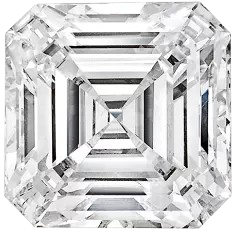
Brilliant, radiant or princess cut diamonds? All 3 are excellent choices for hiding small inclusions. On the contrary, Asscher emerald cuts, with fewer facets, tend to reveal them more.

An optimal cut not only camouflages defects, but (in addition to shine) sublimates the color of the diamond. Perfection is not necessary to own a gemstone!

4. Ask about the size of the diamond

It’s not all about carat weight: two 1-carat round brilliant-cut diamonds can look very different; one might be flatter and wider, while the other deeper. You can get a 1 carat diamond that actually looks like a 1.50 carat diamond. Cuts with a larger diameter and shallower depth cover a larger portion of the finger and give the illusion of a diamond that is much heavier than reality.

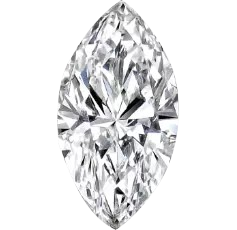
Shoppers looking for diamonds that appear larger should opt for elongated oval, pear, and marquise shapes, which appear larger. However, some people are reluctant to overdo it. “Customers say, ‘I want a substantial size, but not so big that people think it’s lab-grown.

5. Consider antique diamonds

Antique diamonds are not only fascinating, but they also represent an excellent investment Old European and old mine, with their generous facets, tend to appearwhitercompared to modern diamonds of the same color classification.

Don’t let the certified color fool you! An antique diamond rated J, K or I can shine beautifully, especially when set in a yellow gold ring.

Additionally, antique diamonds give off awarmth and romanceunique, irresistible for many.

Diamond Engagement Ring

Thanks to a bit of creativity and the right advice, you can find the perfect stone for you, without going over your budget. It has never been so simple.

Bon Gioielli: where you can find more than just jewels, useful information for your purchases and a trusted gemologist who looks out for YOUR interests!

Discover the Paraiba Tourmaline with us

Paraiba Tourmaline

History, Properties and Beauty

The Paraiba tourmaline is one of the rarest and most fascinating gems in the world. Its vibrant blue-green colors and unique luminosity have captured the attention of jewelers and collectors since its discovery. In this article, we will explore the history of Paraiba tourmaline, its extraordinary properties, and what makes it one of the most desired gemstones.

The History of Paraiba Tourmaline

Paraiba tourmaline takes its name from the state of Paraíba, Brazil, where it was first discovered in 1989 by a Brazilian miner named Heitor Dimas Barbosa. Barbosa had spent years searching for this unique gem, convinced that there was something special in the hills of Paraíba. His determination was rewarded when he discovered the first Paraiba tourmaline, characterized by a never-before-seen neon blue color. This discovery revolutionized the gem market. The combination of rarity and beauty meant that Paraiba tourmaline quickly became one of the most sought after stones. In subsequent years, other deposits of Paraiba tourmaline were found in Nigeria and Mozambique, but the Brazilian variety remains the most prized and expensive.

The Properties of Paraiba Tourmaline

Color

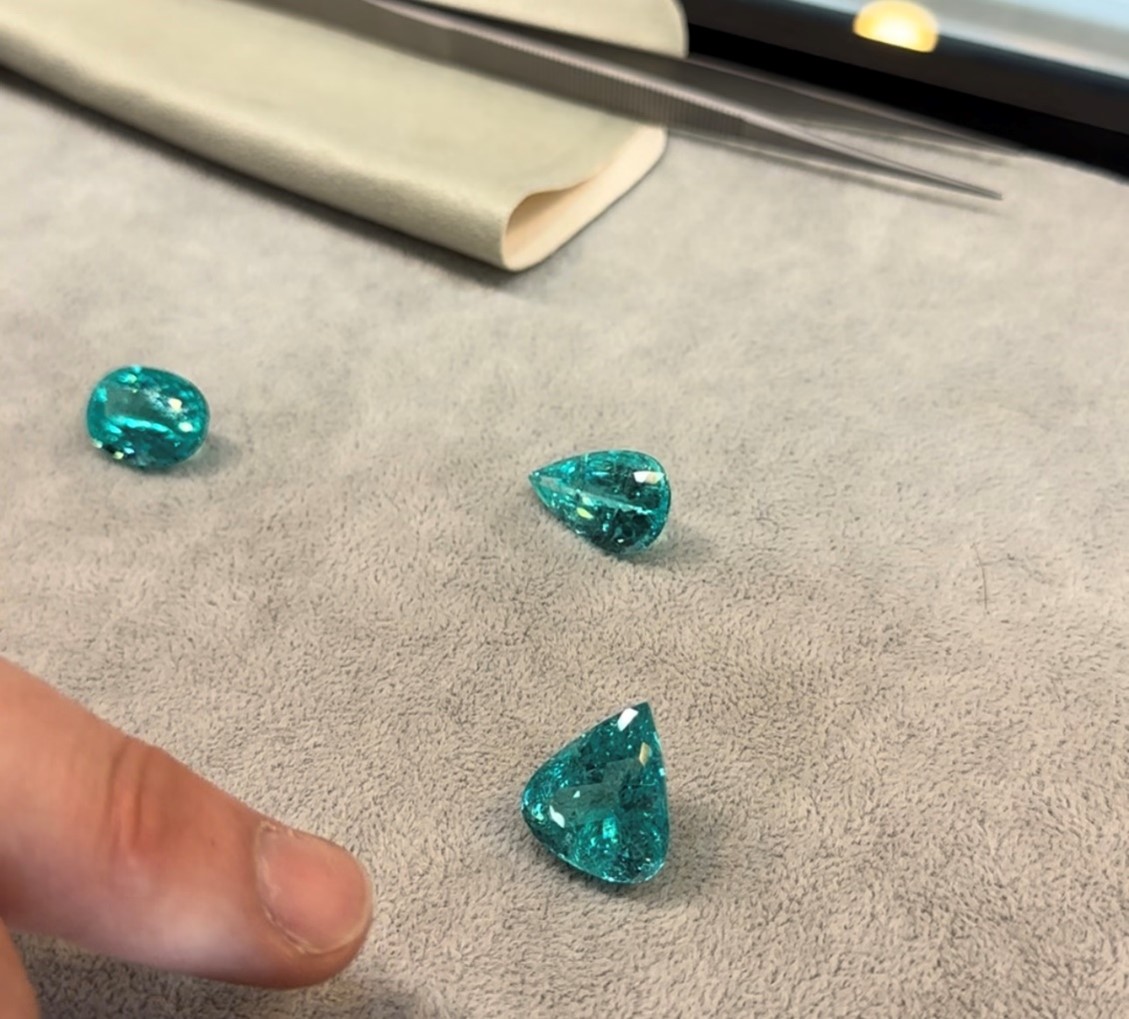
Color is undoubtedly the most distinctive feature of Paraiba tourmaline. The tones range from electric blue to aqua green, with an intense brightness that seems to shine from within the stone itself, but the most beautiful color in our opinion is turquoise. This unique color is due to the presence of traces of copper and, in some cases, manganese.

Brightness and Transparency

Paraiba Tourmaline is known for its extraordinary brightness, making it almost phosphorescent under light. This effect is due to its particular chemical composition and crystalline structure, which allow light to reflect and refract in ways that few other gems can match.

Hardness and Durability

The stone boasts a hardness of 7-7.5 on the Mohs scale, Paraiba tourmaline is durable enough to be used in everyday jewelry. However, like all precious gemstones, it requires care to avoid scratches and damage.

The Beauty of Paraiba Tourmaline

Paraiba tourmaline is celebrated for its hypnotic beauty. Its vibrant colors and brightness make it a perfect gemstone for exclusive and high-class jewelry. Necklaces, rings and earrings adorned with Paraiba tourmalines are symbols of elegance and sophistication, often associated with celebrities and special occasions.

Each piece of Paraiba tourmaline jewelry is unique, as color shades can vary greatly even within the same stone. This makes each jewel an unrepeatable work of art, capable of capturing light and attention in an incomparable way.

Do you know what the most famous Paraiba in the world is?

The Ethereal Carolina Divine Paraiba

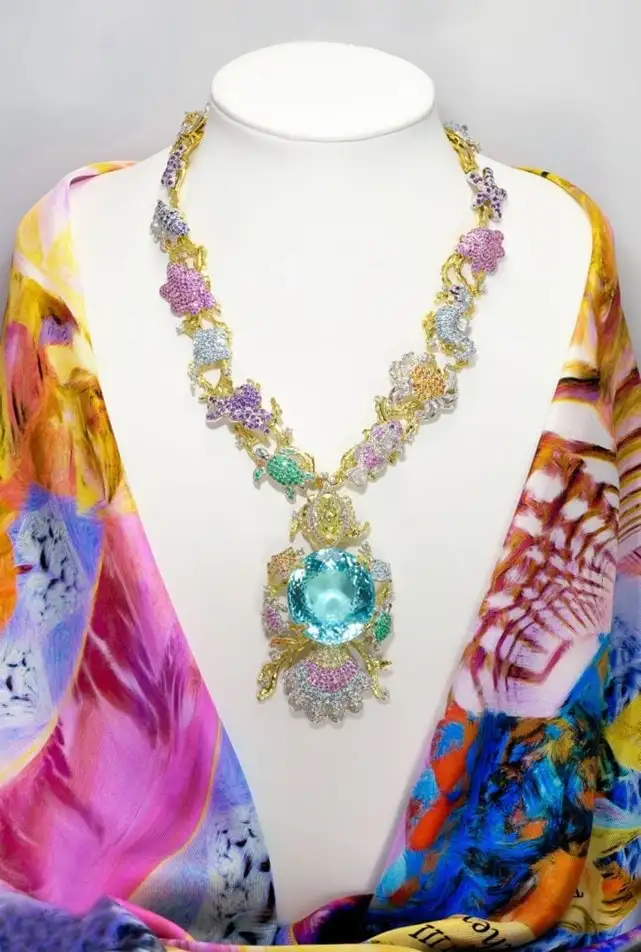
The legendary Ethereal Carolina Divine Paraiba, a neon blue Paraiba tourmaline, is the central focus of the extraordinary “Paraiba Star of the Ocean Jewels” necklace, created by Canadian jeweler Moneca Kauffman. This necklace belongs to billionaire Vincent Boucher. The stone is the largest Paraiba tourmaline ever discovered, weighing 191.87 carats, and holds the Guinness World Record for the largest cut Paraiba tourmaline in the world.

Paraiba Star of the Ocean Jewels Necklace

Originally discovered in 1987 in the Batalha mine in Paraiba, Brazil, the Paraiba tourmaline is extremely rare and coveted. Vincent Boucher, founder and CEO of Billionaire Business Enterprises, Inc., purchased this precious gem in May 2009 and included it in his company’s Planetary Gemstone Collection, hoping it will become the premier collection of colored gemstones in the world.

In 2013, Boucher commissioned Moneca Kauffman to design a necklace that highlighted the beauty of the neon blue paraiba. After six months of work with master jeweler Patrick Gravelle, the necklace was born, adorned with 1,706 brightly colored gemstones, inspired by the sea and the health of the oceans. Paraiba Tourmaline represents the earth’s plants, composed of 70% Oceans. Among all the other precious gems in the necklace, the 10.73-carat yellow diamond stands out in particular, representing the sun and our inner light, illuminated by the beauty of creation.

The necklace was officially unveiled on October 18, 2013, with initial plans to auction it in 2014. However, the auction was canceled and, to this day, the necklace remains the property of Vincent Boucher.

The combination of rarity, beauty and symbolism makes the Ethereal Carolina Divine Paraiba and the “Paraiba Star of the Ocean Jewels” necklace among the most extraordinary treasures in the world of jewelry.

The Paraiba tourmaline is a gem that enchants and fascinates anyone lucky enough to admire it. Its fascinating history, its extraordinary properties and its incomparable beauty make it one of the most sought-after gemstones in the world. If you are a gem enthusiast or simply appreciate the finer things in life, the Paraiba tourmaline is a treasure worth discovering and admiring.

Continue to discover the world of gems with Us, in Bon style: Brilliant, Original and New!

How to Choose the Diamond Carat for Your Engagement Ring

7 + 1 Tips on How to Choose the Carat of Diamond for Your Engagement Ring

Choosing an engagement ring is a special and significant moment in every couple’s life. Among the many decisions to be made, one of the most important is the choice of diamond carat weight. Carat not only determines the size of the diamond, but also affects the overall appearance and value of the ring. In this blog, we’ll walk you through the main factors to consider when choosing the ideal diamond carat weight, helping you make a choice that satisfies both your desires and those of your partner.

1. Understanding Carat

Carat (Ct) is the unit of measurement that indicates the weight of a diamond, with one carat equal to 0.2 grams. Although it is an indicator of size (diameter), carat weight is only part of the equation. The cut, shape and proportion of the diamond influence the visual perception of its size.

choosing the carat of your diamond

2. Balance the Budget

The budget is a crucial element in choosing the caliber. Higher carat diamonds tend to be significantly more expensive. It is essential to establish a realistic budget that includes both the diamond and the ring design. Bon Gioielli offers an excellent quality/price ratio, guaranteeing high quality GIA and IGI certified diamonds, both natural and laboratory, allowing you to find the perfect ring without compromises.

3. Consider Your Partner’s Preferences

Understanding your partner’s tastes and preferences is crucial. Some people prefer a larger diamond for a more impactful visual effect, while others may appreciate a smaller but higher quality stone. Look carefully at the type of jewelry your partner usually wears to get an idea of his or her preferences.

4. Evaluate the Ring Design

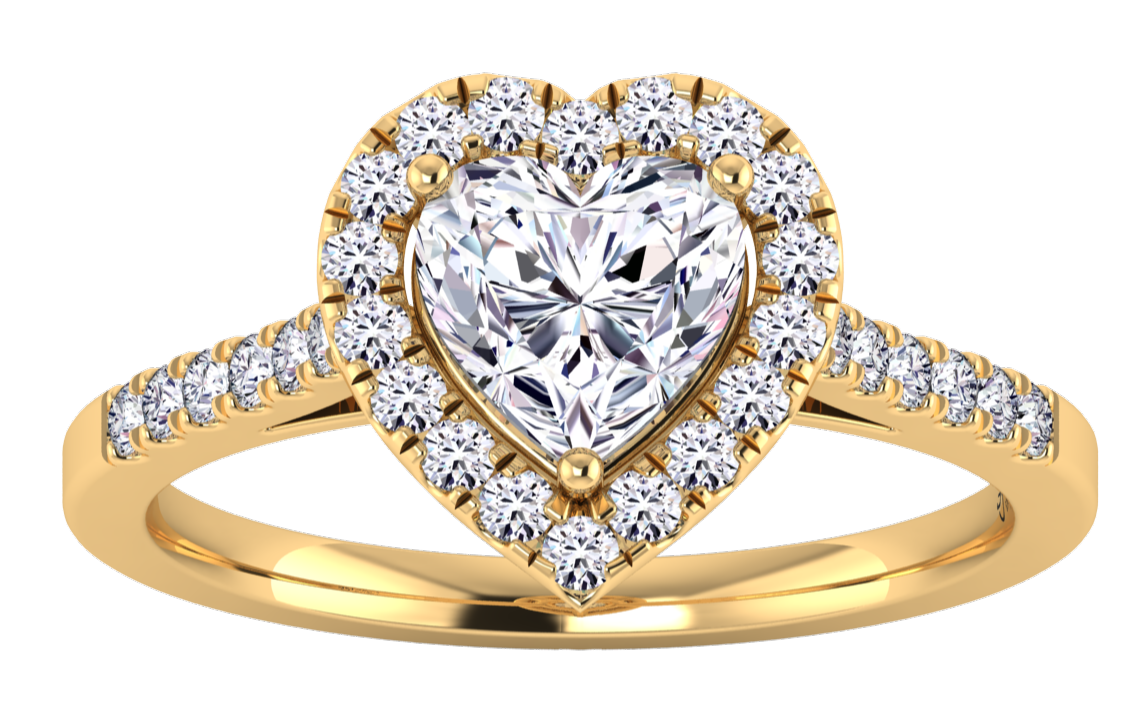
The design of the ring plays an important role in choosing the carat weight of the diamond. For example, a classic solitaire highlights the central stone, while a ring with diamonds set around it can enhance a lower carat central stone. Bon Gioielli’s collection includes classic solitaires, diamond-set solitaires and options with diamonds along the shank, allowing you to find the ideal combination.

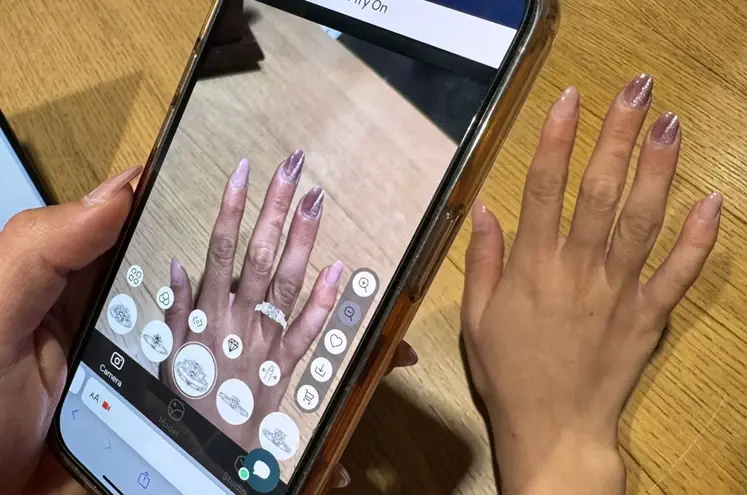
5. Use the AR Virtual Try-ON

Bon Gioielli offers an innovative virtual “Try On” service available on the mobile version of our website, which allows you to see how the diamond looks on your finger. This tool is extremely useful for viewing different diamond sizes and finding the one that best suits your partner’s preferences.

AR Virtual Try-On

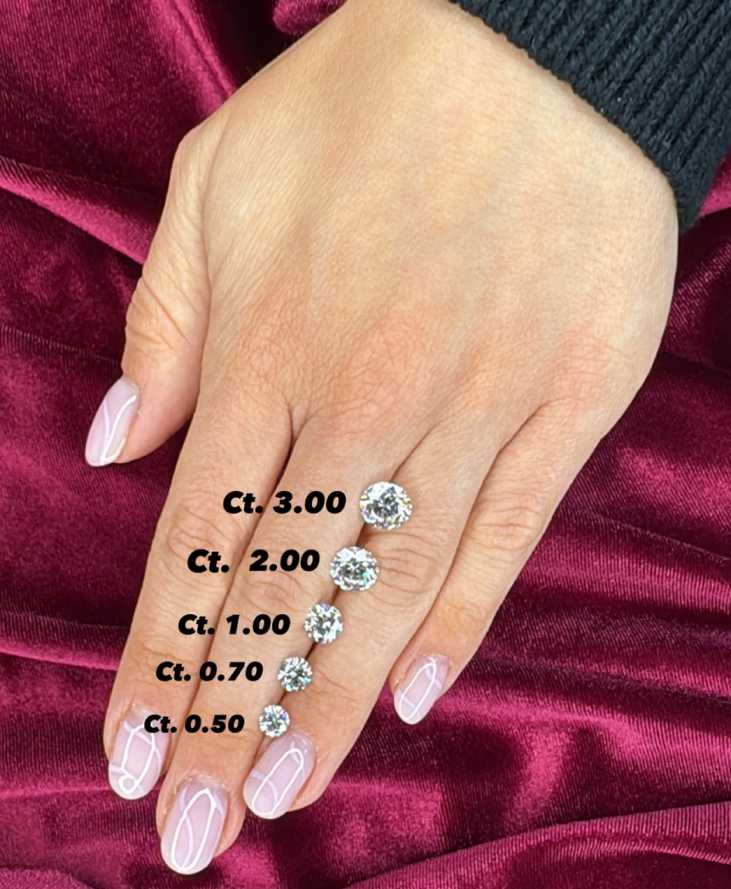
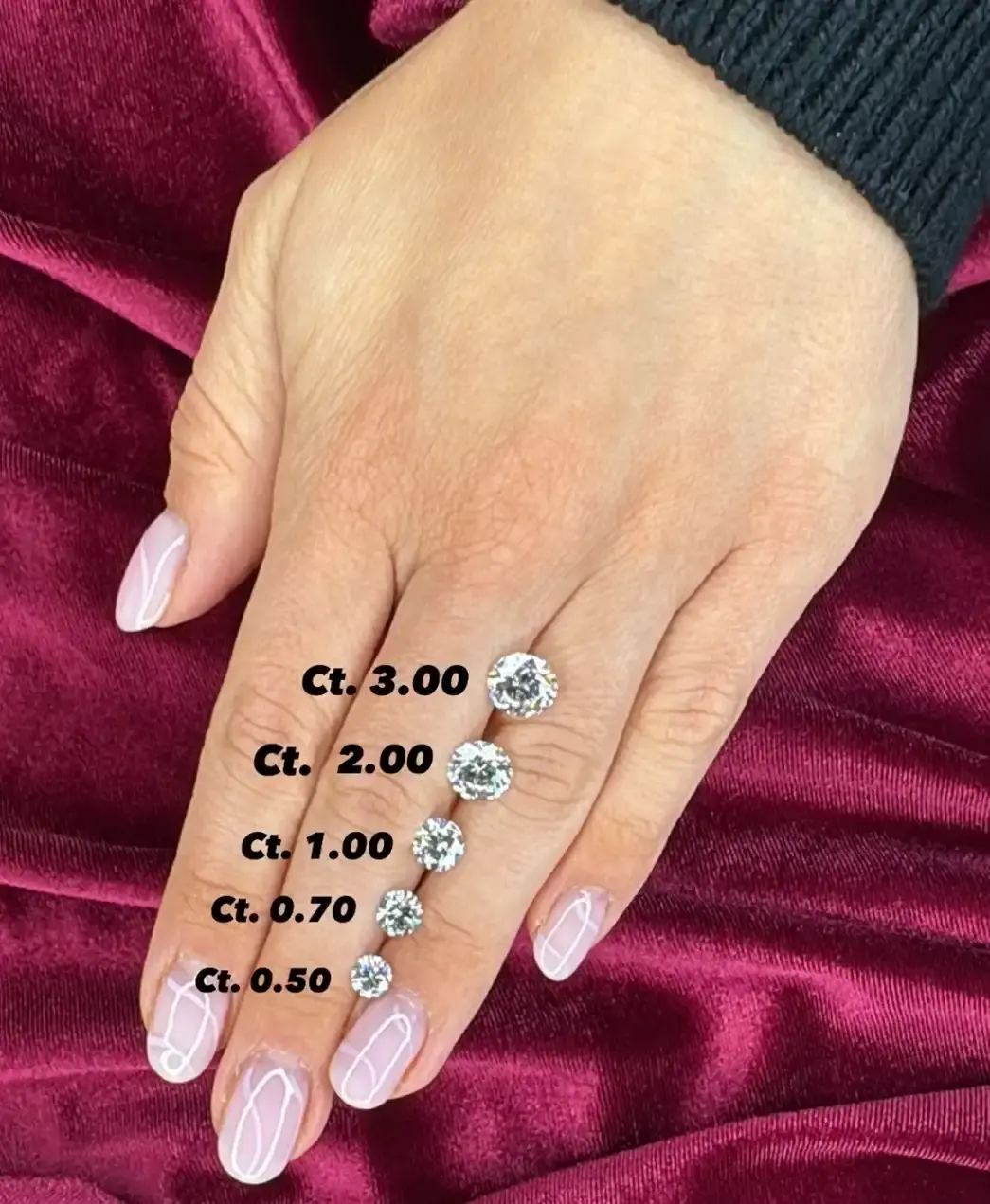
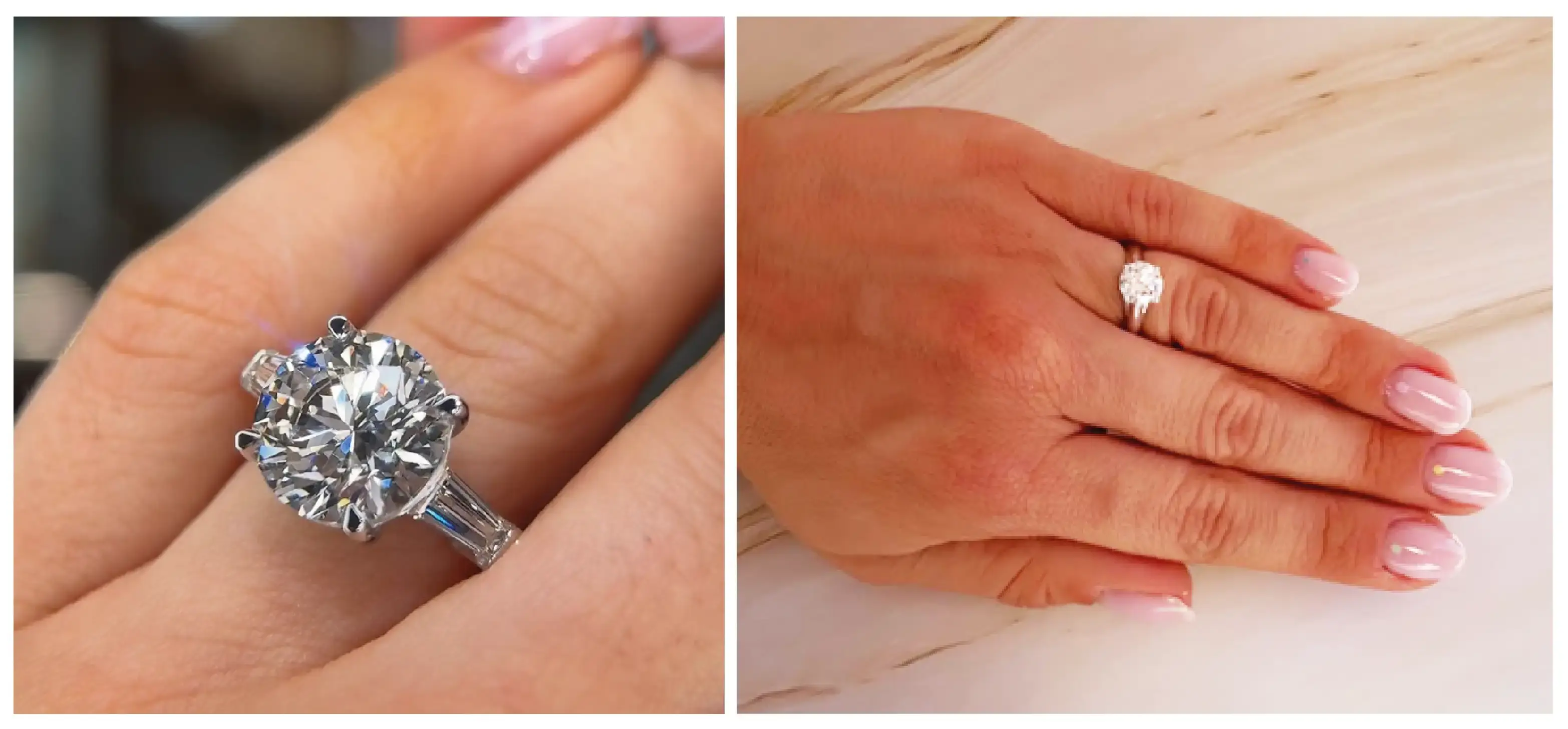
6. Consider Proportion in Hand

The size and shape of the recipient’s hand are factors to carefully consider. A large diamond may look disproportionate on a petite hand, while a smaller stone may not have the same visual impact on a larger hand. Take these proportions into consideration to ensure the ring is perfect.

Consider the Proportion of the Hand

7. Enhance Quality

The quality of the diamond is just as important as its carat weight. The famous 4Cs (Carat, Cut, Color, Clarity) determine the beauty and value of a diamond. A high-quality diamond with excellent cut, superior color and clarity, can shine brighter even if it is lower in carat weight. At Bon Gioielli, each diamond is selected and certified to guarantee the highest quality.

8. Professional Consulting

Expert advice can make the difference in choosing the ideal diamond. Francesco Bon, founder of Bon Gioielli and internationally renowned gemologist, offers specialized consultancy and personally supervises every phase of the creation of the rings. His experience will guide you in choosing the perfect diamond, ensuring that every detail is taken care of with the utmost attention.

Professional Consulting

Conclusion

Choosing the diamond carat weight for your engagement ring is a personal and meaningful decision that reflects your love and commitment. By carefully considering your budget, partner’s preferences, ring design, hand proportion, and diamond quality, you can make an informed and satisfying choice. Bon Gioielli is here to support you every step of the way on this journey, offering a combination of professionalism, attention to detail and passion for the art of jewellery. With our help, you will find the perfect engagement ring that will embody your everlasting love.

Natural Zircon Vs Cubic Zirconia: A Complete Guide

Natural Zircon Vs Cubic Zirconia: A Complete Guide

In the world of jewelry, the term “zircon” can often cause confusion, especially when talking about natural zircon and cubic zirconia (CZ). The two crystals share a similar name, their characteristics, origins and uses are significantly different. In this blog, we will explore the differences between natural zircon and cubic zirconia in detail, clearing up any doubts and helping you make more informed choices for your jewelry purchases.

Natural Zircon: A Treasure of Nature

Origin and Composition

Natural zircon is a mineral that occurs naturally in different parts of the world. It is composed primarily of zirconium silicate (ZrSiO4) and may contain traces of uranium, thorium and other elements. Its formation occurs in igneous and metamorphic rocks, making it a rare and precious mineral.

natural zircon

Features and Appearance

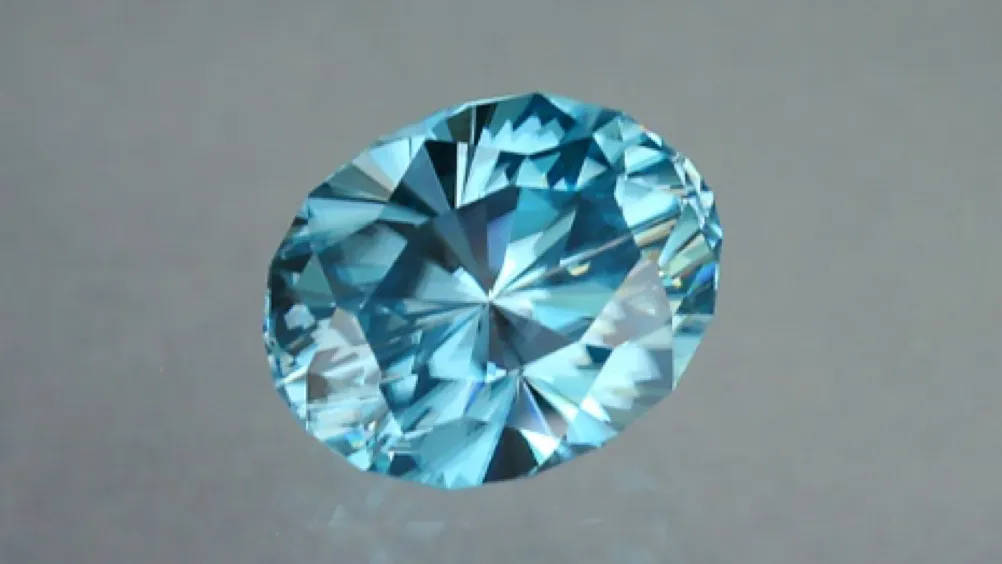
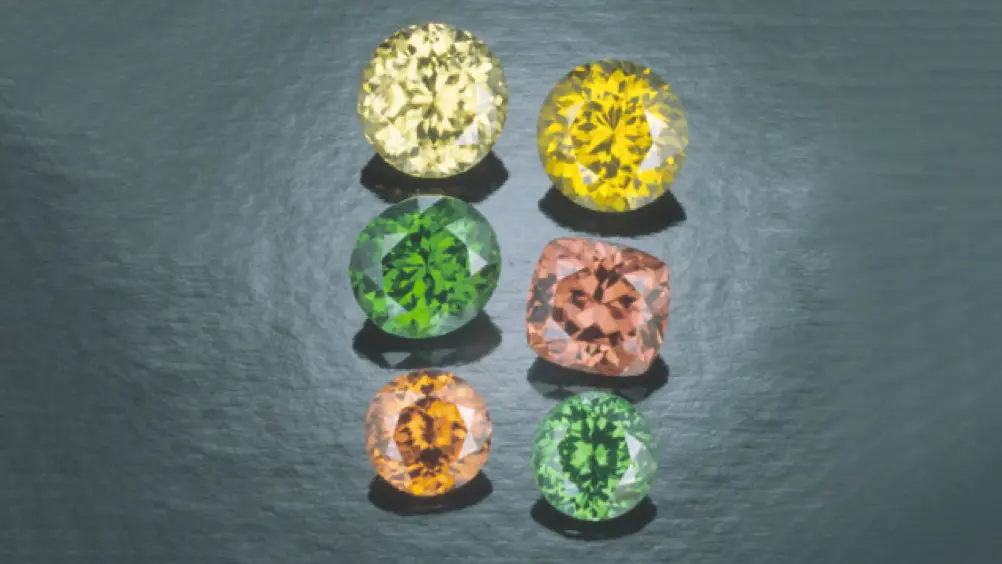
The brilliance and light dispersion of natural zircon rival that of diamond. It is found in a range of colors, including colorless, yellow, brown, red, green, and blue. Its hardness on the Mohs scale ranges from 6.5 to 7.5, making it quite durable but more prone to scratches than diamonds.

zircon coloring

Use in jewelry

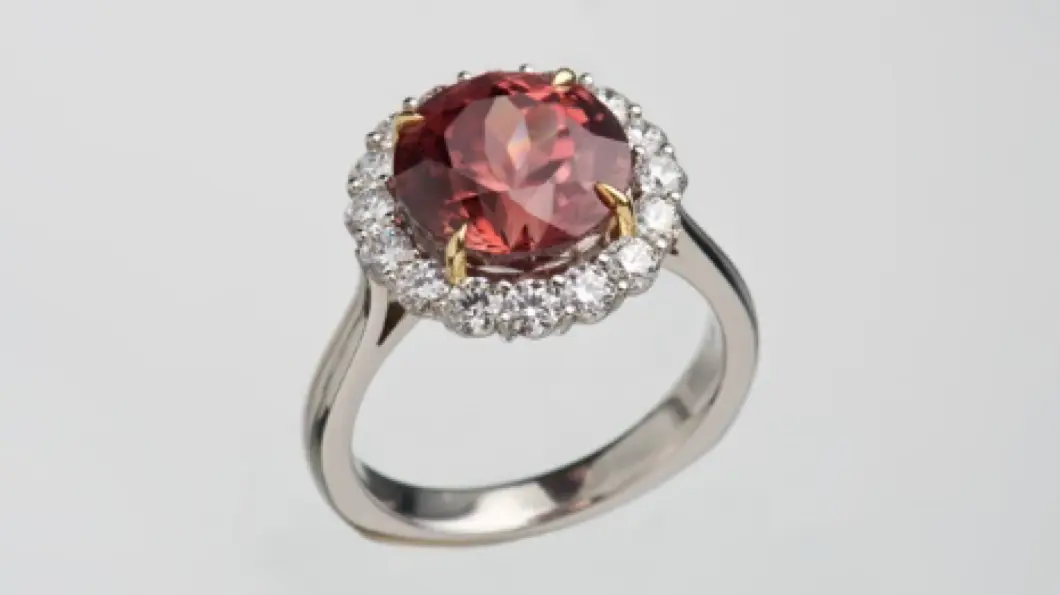
Due to its brilliance and variety of colors, natural zircon is used in rings, earrings, necklaces and other jewelry pieces. Each stone is unique, which adds a special touch to the jewelry it is set in.

use of zircon in jewelry

Cubic Zirconia: The Man-Made Gemstone

Origin and Composition

Cubic zirconia, often abbreviated to CZ, is a synthetic material created in a laboratory. It is composed of zirconium oxide (ZrO2) stabilized with yttrium oxide. Its industrial production began in the 1970s and has since become one of the most popular synthetic gems in the jewelry world.

Use in jewelry

Due to its beauty and lower cost than diamonds, cubic zirconia is widely used in engagement rings, earrings, bracelets and other jewelry. It is especially popular for fashion jewelry and for those who want a diamond-like appearance without the associated high cost.

1. Origin:

– Natural Zircon: Natural mineral extracted in nature
– Cubic Zirconia: Synthetic material produced in the laboratory.

2. Composition:

– Natural Zircon: Zirconium silicate (ZrSiO4).
– Cubic Zirconia: Zirconium oxide (ZrO2).

3. Brillance:

– Natural Zircon: High light dispersion, similar to diamonds.
– Cubic Zirconia: Very brilliant, but less so than most high-quality diamonds.

4. Hardness:

– Natural Zircon: 6.5 – 7.5 on the Mohs scale.
– Cubic Zirconia: Approximately 8.5 on the Mohs scale.

5. Price:

– Natural Zircon: Generally much more expensive than CZ, but less than natural diamonds.
– Cubic Zirconia: Cheaper and accessible.

Conclusion

Both natural zircon and cubic zirconia have their place in the world of jewelry, each with their own distinctive characteristics. The choice between the two depends on your personal preferences, budget and intended use of the jewelry. Natural zircon offers unique beauty and a natural origin, while cubic zirconia provides a brilliance similar to diamonds at a much lower cost and is used in the goldsmith sector as an imitation diamond.

Whatever your choice, at Bon Gioielli we are committed to offering you only the best, with stones selected and worked with the utmost care and attention to detail. Visit our website to explore our collections and discover the perfect jewel for you.

Bon Gioielli Shines at GemGenève 2024: A Journey of Elegance and Innovation

Bon Gioielli Shines at GemGenève 2024: A Journey of Elegance and Innovation

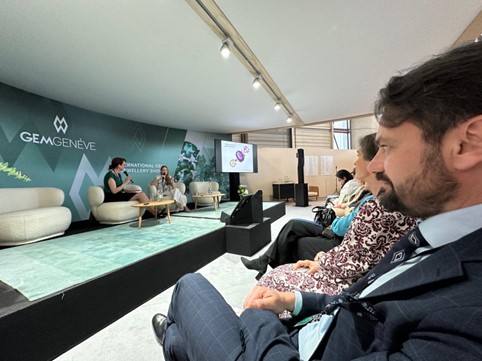
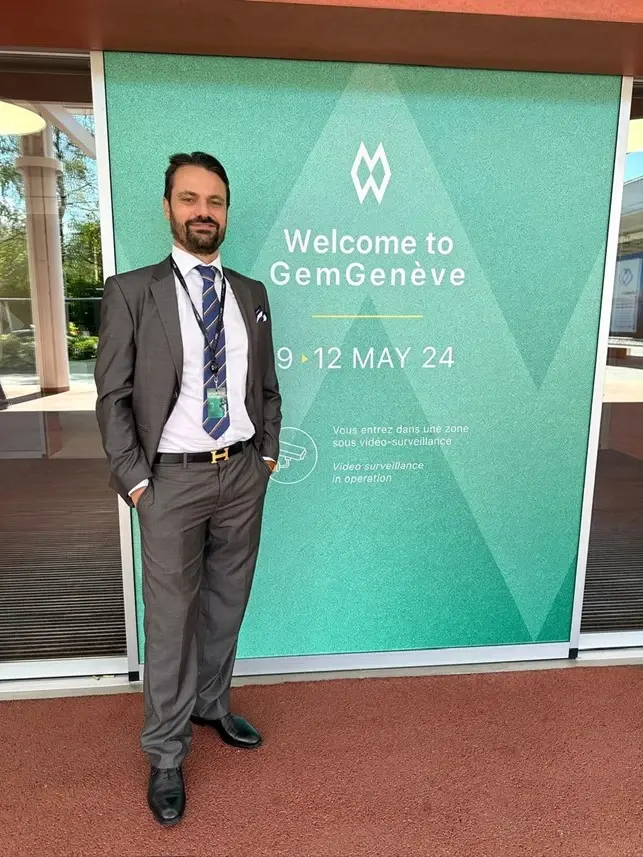
From 9 to 12 May 2024, the city of Geneva hosted one of the most prestigious events in the world of international jewelry: GemGenève. This event, known for its exclusivity and for the presence of the most important players in the sector, saw the participation of Bon Gioielli, represented by its founder, Francesco Bon.

An Event of Luxury and Innovation

GemGenève is much more than just a fair. It is a meeting point for gemologists, designers, producers and collectors from all over the world. Each year, the event stands out for excellence and innovation, showcasing the latest trends and the rarest and most precious gems. Bon Gioielli’s participation in this event not only highlights our dedication to quality, but also our commitment to remaining at the forefront of the jewelry industry.

Francesco Bon: A Gemologist of Renowned Experience

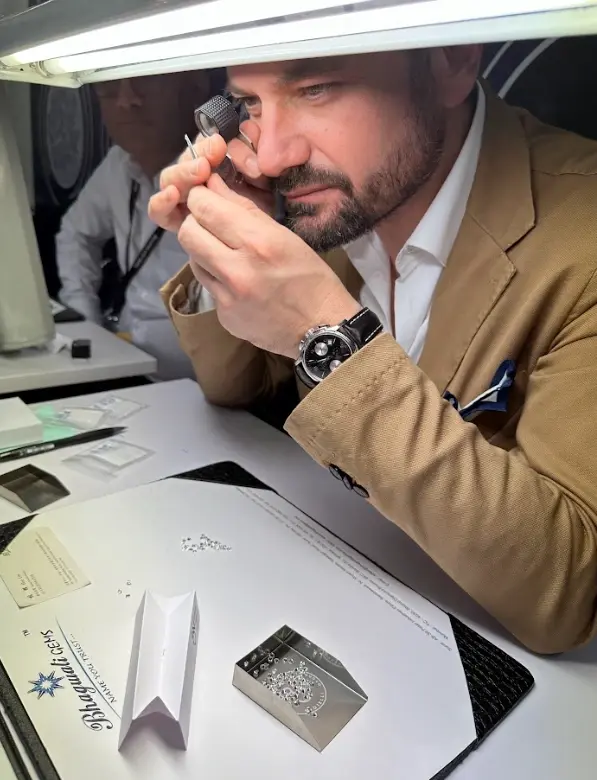
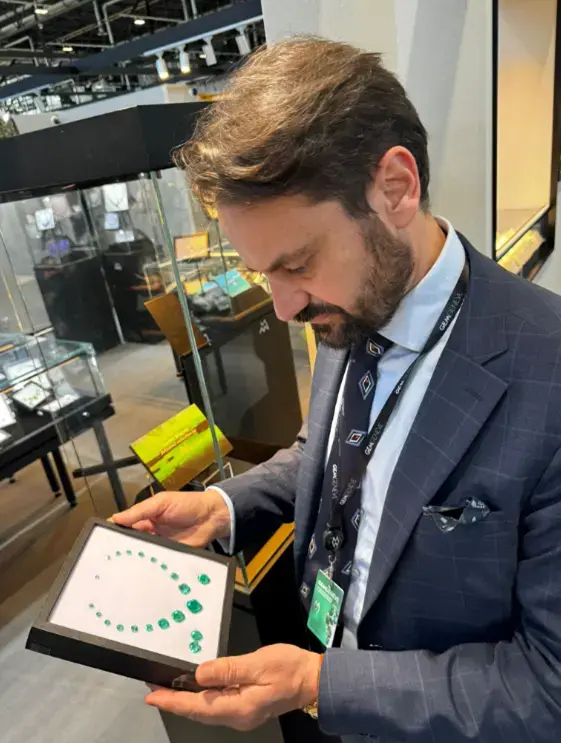
Francesco Bon, founder of Bon Gioielli, is an internationally renowned gemologist with an innate passion for precious stones. His presence at GemGenève was fundamental not only to represent our company, but also to establish new collaborations and discover the latest innovations in the field of diamonds and gems. During his visit, Francesco had the opportunity to explore new diamond processing and selection techniques, meet other industry experts and participate in exclusive conferences and workshops.

Gemologist Rome Francesco Bon GemGeneve
Gemologist GemGeneve

The Excellence of Bon Gioielli Diamonds

At GemGenève, Francesco Bon was exposed to the highest standards of quality and authenticity in the diamond industry, further strengthening Bon Gioielli’s commitment to providing only the best to our customers. Our natural diamonds, certified by both the GIA (Gemological Institute of America) and the IGI (International Gemological Institute), are selected with care to guarantee brightness and rarity standards.

A Journey of Creativity and Detail

The visit to GemGenève inspired new ideas and confirmed the importance of every step of the jewelery making process. From CAD design to wax printing, from casting to finishing, from setting to polishing and rhodium plating, every detail is essential to creating unique and extraordinary jewels. Our team of expert craftsmen and designers work tirelessly to transform every vision into reality, ensuring a final product that reflects the excellence and passion of Bon Gioielli.

A Direct and Transparent Relationship with Our Customers

One of the most important aspects of Bon Gioielli is the direct and transparent relationship that we establish with each customer. Francesco Bon brought this philosophy to GemGenève, underlining the importance of impeccable and personalized service. Our goal is to offer an unforgettable shopping experience, characterized by professionalism, attention to detail and an excellent quality/price ratio.

Packaging with Care and Love

Each jewel of Bon Gioielli is packaged with the utmost care and shipped directly to the recipient. Our participation in GemGenève has strengthened our commitment to ensuring that each customer receives not just a jewel, but a piece of art, packaged with love and passion.

Conclusion

Bon Gioielli’s participation in GemGenève 2024 was an extraordinary and enriching experience. It allowed Francesco Bon to explore new frontiers in the field of jewelry and to bring home new inspirations and knowledge. We will continue to innovate and create jewelry that not only reflects our dedication to quality, but also our passion for excellence. We are excited to share this experience with you and continue to offer you extraordinary jewelry, created with love and craftsmanship.

gemegeneve2024 emeralds